
- At least eight second-hand LNG carriers have reportedly entered Russian service in six months, taking Moscow’s unofficial fleet to about 25 vessels.
- The EU will prohibit Russian LNG imports under long-term contracts from January 2027, while new restrictions also target tanker sales, maintenance and terminal services.
- Russia can divert more sanctioned LNG to China, but specialised vessels, compatible terminals and Arctic operating conditions make sanctions evasion harder than in oil.
Russia is assembling a larger fleet of ageing and opaquely owned LNG carriers as it prepares for an EU ban that threatens one of the country’s remaining sources of energy revenue.
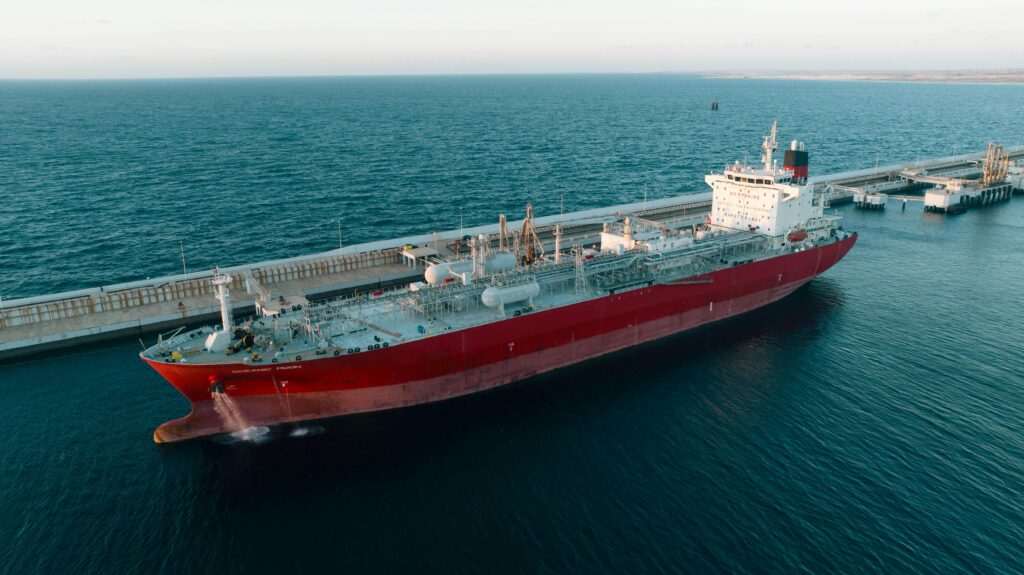
At least eight second-hand LNG tankers have been sold and subsequently used to carry Russian cargoes during the past six months, according to the Financial Times. The additions take Russia’s unofficial LNG fleet to around 25 vessels, including two recently delivered tankers built at the Zvezda shipyard.
The strategy resembles the much larger shadow fleet developed to carry Russian oil after western countries introduced sanctions and a price cap following Moscow’s invasion of Ukraine. Ships are held through hard-to-trace companies, frequently change flags and may manipulate their tracking signals or carry out ship-to-ship transfers.
LNG presents more difficult operational constraints. The fuel must remain at approximately minus 162°C, requiring expensive cryogenic containment systems and access to compatible liquefaction and receiving terminals. Russia’s Arctic projects also require ice-class ships for part of the year or transhipment arrangements involving conventional carriers.
Those constraints have helped western sanctions delay the full commercial operation of Arctic LNG 2, the $21 billion Novatek-led project developed to establish Russia as a much larger global LNG supplier.
The project has nevertheless found a route into China. Beijing is preparing a second import terminal to receive sanctioned Russian cargoes after the Beihai terminal took 41 shipments totalling 2.6 million tonnes between August 2025 and June 2026. The Longkou terminal in Shandong could begin accepting cargoes before October, according to Reuters.
Additional ships would allow Russia to increase those deliveries and keep cargoes moving from other facilities, including Yamal LNG and Sakhalin-2, if European transport and service restrictions tighten.
The EU’s phase-out will begin earlier for new and short-term arrangements, with the prohibition applying to LNG supplied under long-term contracts from 1 January 2027. Pipeline imports are due to end later that year. Russia still supplied about 12% of EU gas imports in 2025, down from 45% before the invasion of Ukraine.
Brussels has also introduced due-diligence requirements covering tanker sales and prohibited maintenance and other services for Russian LNG ships and icebreakers. From January 2027, EU terminals will be barred from providing services to Russian-controlled operators.
The UK introduced its own prohibition on maritime transportation and associated services for Russian LNG in May. The measure puts UK-based insurance, finance, ship management and technical services within the enforcement perimeter, although time-limited exemptions have complicated its immediate effect.
The fleet’s expansion does not mean sanctions have failed. Arctic LNG 2 is operating below its intended scale and remains dependent on a small number of Chinese terminals willing to handle its cargoes. Russia also lacks western access to many of the containment, maintenance and technical systems needed to operate LNG carriers reliably.
However, the figures show that a ban on European purchases will not automatically remove Russian LNG from the world market. Some supply will be redirected to China at discounted prices, freeing other cargoes for Europe and changing trade patterns rather than reducing global availability by the same volume.
The next phase of sanctions will depend on identifying ship ownership, stopping tanker resales and enforcing restrictions against service providers. LNG’s specialised supply chain creates more points of intervention than oil, but it also requires consistent action across Europe, Britain and Asian maritime centres.