- Provisional data shows that 43,547 battery electric vehicles (BEVs) were registered in July, 49% more than a year earlier.
- BEVs captured 27.4% of the UK market, lifting their year-to-date share to 25.3%.
- That remains below the statutory 33% headline target, but New AutoMotive estimates it is above the effective market-wide requirement after flexibilities.
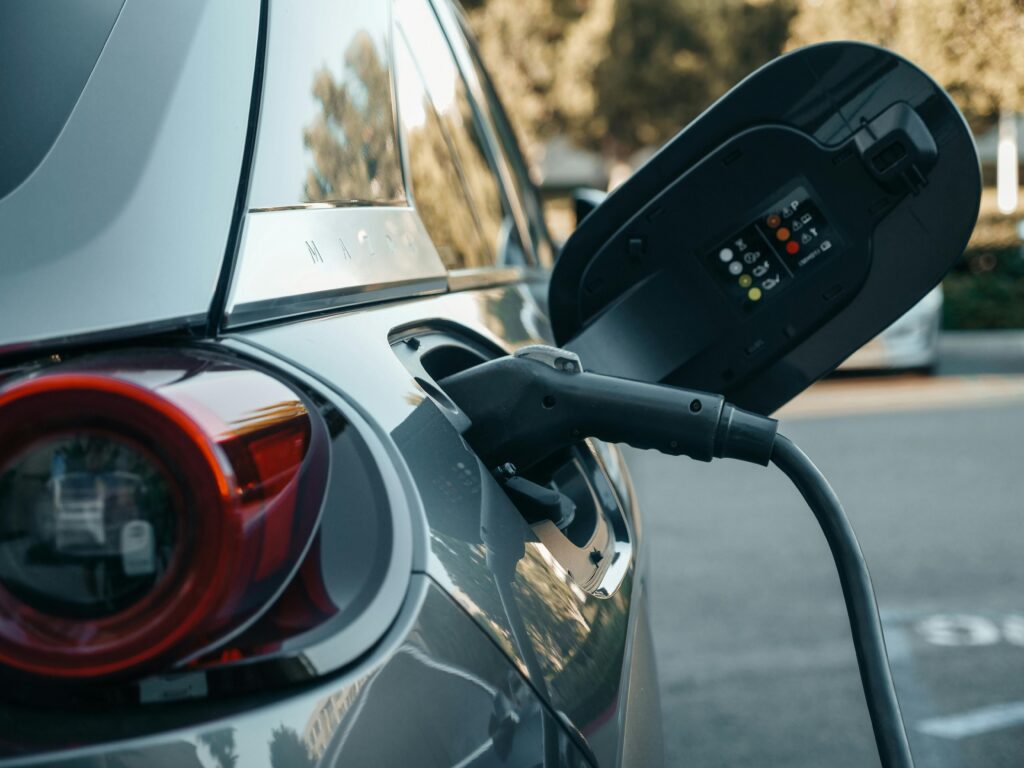
Battery electric vehicles (BEVs) accounted for more than one quarter of new UK registrations in July, providing further evidence that the market is gaining momentum after a difficult start to the year.
Provisional figures compiled by New AutoMotive show 43,547 BEVs were registered during the month, up from 29,226 in July 2025. Their market share rose to 27.4%, while the share across the first seven months of 2026 reached 25.3%.
It was the second successive month in which registrations ran ahead of New AutoMotive’s estimate of the effective Zero Emission Vehicle mandate trajectory.
The statutory target requires 33% of each large manufacturer’s 2026 car registrations to be zero emission. However, companies can comply through mechanisms including allowance trading, borrowing from future years and converting emissions savings from their remaining combustion engine fleets.
New AutoMotive estimates that these flexibilities reduce the effective market-wide requirement to approximately 24.6%. That makes the 25.3% year-to-date share more encouraging than a simple comparison with the 33% target would suggest.
The government has retained the headline trajectory while extending several compliance mechanisms to give manufacturers more routes through the transition. Companies that remain short after using the available provisions face a compliance payment of £12,000 per vehicle.
The July estimate follows a particularly strong June. Final Society of Motor Manufacturers and Traders (SMMT) data recorded 63,950 BEV registrations that month, up 35% year on year and equivalent to a record 30% market share. The first-half share stood at 25%.
Several factors may be supporting the improvement. Higher petrol and diesel costs have strengthened the running cost case for switching, while manufacturers are offering a wider selection of electric models. Government grants provide discounts of up to £3,750 on eligible cars priced at £37,000 or less.
Manufacturer support has not disappeared. HSBC analysis reported by The Times put the average discount on a new electric car at 11% in July – the lowest level in more than a year, suggesting demand has strengthened – but it remains a substantial commercial intervention.
The main unresolved question is who is buying. Fleets represented 59.5% of all new car registrations in June, although private volumes also increased. The eventual SMMT release will provide a more authoritative July total and greater detail on buyer type, brands and models.
That breakdown will determine whether the latest growth represents a genuinely broader consumer transition or remains disproportionately reliant on company car taxation, fleets and manufacturer-led incentives.
Even with those caveats, two consecutive months above the estimated effective mandate path weaken the argument that the regulation is plainly detached from market conditions. The mandate appears to be pushing supply, competition and pricing in the intended direction without producing the collapse in overall demand predicted by some critics.
The stronger test will come when oil prices ease and manufacturers reduce discounts. A durable mass market must continue expanding when the immediate cost advantage of avoiding petrol becomes less compelling.