
- As part of its clean‑power mission, the UK government is making plug‑in solar panels available in stores and will require all new homes to be built with solar panels.
- Ministers view rooftop solar as a way to shield households from volatile gas markets and cut bills.
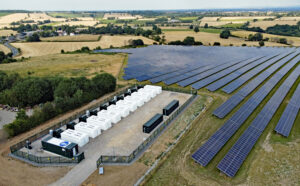
- Widespread adoption of rooftop solar could reshape the distribution grid and support local battery storage, creating opportunities for installers and smart‑grid firms.
Beyond mega‑projects like Springwell, the UK government is betting on rooftops to insulate households from the rollercoaster of global energy prices.
In a Transport and Energy article, officials highlighted measures to bring plug‑in solar panels to the UK market and to mandate solar panels on new homes. Energy Minister Michael Shanks said these initiatives, alongside large‑scale projects, will help Britain “get off the rollercoaster of international fossil fuel markets”.
The plug‑in kits are designed to be easy for homeowners to install without major building work. They will allow households to generate some of their own power and sell excess electricity back to the grid under smart export tariffs.
The move mirrors similar programmes in Germany and the Netherlands, where plug‑and‑play solar has taken off. Requiring solar panels on new homes could dramatically expand solar deployment, especially in regions with fewer large solar farms.
The government notes that global instability “from Ukraine to the war in Iran” has exposed the cost of relying on fossil fuel markets. By expanding rooftop and utility‑scale solar, officials hope to lower bills and enhance energy independence.
The policy builds on a series of actions: accelerating the next Contracts for Difference auction to July, increasing the frequency of renewables auctions and providing grants for home insulation and heat pumps.
A hedge
The rooftop push represents both challenges and opportunities. Network operators will need to manage rising numbers of small generators, integrating them through smart inverters and flexible tariffs. Installers and manufacturers will see increased demand for solar panels, mounting systems and battery storage.
Finance providers may develop new products to help homeowners spread upfront costs. At the same time, the policy raises questions about planning regulations, grid capacity and the need to train installers at scale.
In the broader context of energy security, rooftop solar is a hedge against geopolitical turmoil. Households generating their own electricity are less exposed to price spikes tied to Hormuz or other international events. A decentralised grid with distributed generation also improves resilience.
While rooftop solar cannot substitute for all imported energy, it contributes to a more balanced and locally controlled system, helping Britain navigate an era of heightened global volatility.