

- The UK government has explicitly linked clean energy to national security, with ministers arguing renewables reduce exposure to sabotage and geopolitical shocks.
- The narrative shift reflects a political repositioning of ‘net zero’.
- This could reshape public and Treasury support for clean power investment.
The UK government is repositioning renewable energy as a pillar of national security, marking a notable shift in how the energy transition is being framed at the highest levels of policy.
Speaking over the weekend, energy minister Michael Shanks said expanding domestic renewable generation would “protect the UK from sabotage and geopolitical shocks”, according to reporting by The Guardian. The comments come amid heightened concern over global instability and the vulnerability of fossil fuel supply chains.
The intervention reflects a broader strategic recalibration. Rather than relying on climate-led arguments, ministers are increasingly presenting clean energy as a means of insulating the UK from volatile global markets and hostile actors. The approach mirrors similar rhetoric emerging across Europe following Russia’s invasion of Ukraine and ongoing tensions in the Middle East.
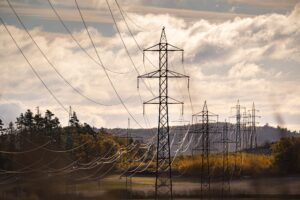
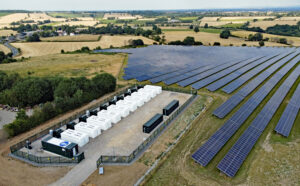
For policymakers, the logic is straightforward. Renewable energy – particularly wind and solar – reduces reliance on imported fuels and centralised infrastructure, both of which are susceptible to disruption. Distributed generation and electrification also create a more resilient system overall.
However, the shift is as much political as it is technical. By anchoring renewables in national security, the government is attempting to broaden the coalition of support for net zero, particularly among voters and stakeholders less motivated by climate concerns.
The timing is significant. The UK is under pressure to deliver its clean power by 2030 target, while also managing rising energy demand and strained public finances. Framing renewables as strategic infrastructure could strengthen the case for accelerated investment in grids, storage and generation.
The argument is not without tension. Critics point out that renewables alone cannot guarantee energy security without sufficient flexibility, storage and backup capacity. Gas remains a key balancing fuel, and the UK continues to rely on imports for critical minerals and clean technology components.
The deeper implication is that energy policy is entering a new phase. The debate is no longer simply about decarbonisation or cost – it is about resilience, sovereignty and system design. For industry, that changes the investment narrative. Projects that can demonstrate security benefits alongside emissions reductions are likely to gain political traction.