
- The Global Wind Energy Council’s 2026 Offshore Wind Report projects offshore wind capacity will soar from 92 GW in 2025 to about 420 GW by 2035, with more than 327 GW of new global capacity expected.
- Annual installations are forecast to double in 2026, triple by 2031 and exceed 50 GW per year by 2035, reflecting accelerating build‑out despite supply‑chain and permitting challenges.
- GWEC warns that slow planning approvals and grid connections could delay projects, urging governments to expedite consenting and investment in transmission.
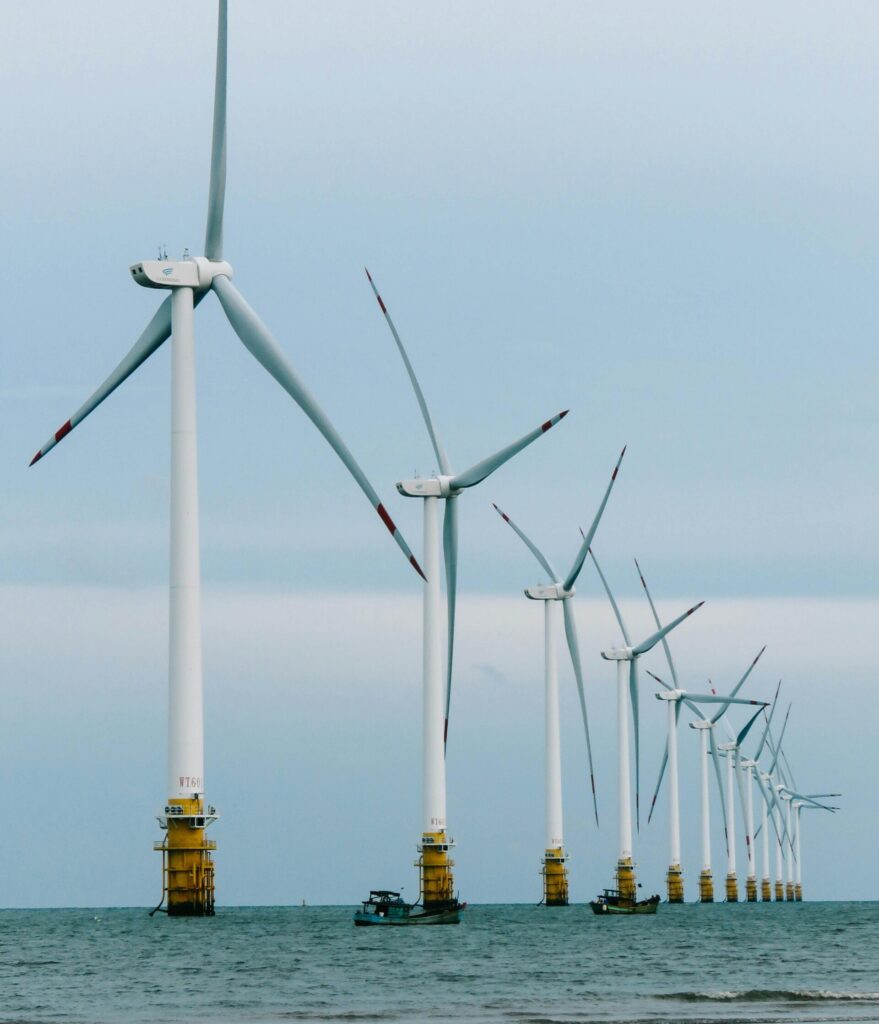
Global offshore wind capacity is poised to quadruple within a decade as countries accelerate clean energy deployment to reduce fossil fuel dependence.
A new report from the Global Wind Energy Council forecasts that 327 GW of additional offshore‑wind capacity will be installed by 2035, taking the global total to about 420 GW. That expansion would deliver annual installations above 50 GW by 2035 – equivalent to building the UK’s current offshore‑wind fleet every year.
What’s driving the boom?
Offshore wind is becoming a cornerstone of energy‑security and decarbonisation strategies. China leads the pack, with more than half of current capacity and a pipeline of projects dwarfing other regions.
The report notes that more than 50 GW of offshore wind was under construction globally in 2025, with installations expected to double in 2026 and triple by 2031.
Several factors underpin this surge:
- Economies of scale – Larger turbines (15 MW+) and floating foundations are lowering levelised costs, particularly in established markets.
- Policy momentum – Countries such as the UK, Germany, the US and Japan have set offshore‑wind targets totalling hundreds of gigawatts. Competitive auctions and contracts for difference provide revenue certainty, while green‑hydrogen plans create demand for offshore power.
- Industrial strategies – Governments are using offshore wind to build domestic supply chains, create jobs and revitalise port infrastructure.
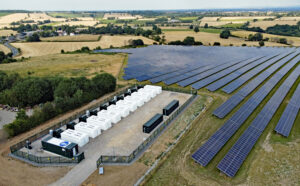
- Grid and storage integration – Increasingly, offshore wind is being paired with hydrogen electrolysers, battery storage and interconnectors to provide dispatchable power and support cross‑border electricity trade.
The UK was the world’s largest offshore wind market until China’s recent surge and still hosts a quarter of global capacity. However, the report warns that planning delays and constrained grid capacity could slow the UK’s pipeline.
ScotWind and the Crown Estate’s Round 4 lease programmes aim to add more than 20 GW of capacity, including floating wind projects, but local opposition and supply chain bottlenecks pose risks.
Competition from Europe and Asia for vessels, cables and turbines may also drive up costs. The GWEC report’s call to “fast‑track projects” is key as the UK government reviews its consenting regime and considers reforming grid connection rules.
The projected quadrupling of offshore wind underscores the sector’s transition from niche to mainstream. The scale of capital required (hundreds of billions of pounds) suggests a long runway for project finance, but also rising exposure to interest‑rate and geopolitical risks.
The growth also heightens the need for coordinated marine spatial planning to balance energy development with biodiversity protection and fisheries. Finally, as turbines move further offshore, floating foundations will become critical – linking this story with Norway’s Utsira Nord saga.