
- DESNZ has opened a call for evidence from 4 June to 30 July on how to scale up community batteries, inviting input from network operators, councils, social landlords and community groups.
- Community batteries can enable households without rooftop solar or space for home batteries to share in the benefits of storing cheap renewable electricity. Evidence suggests they can reduce bills, smooth peaks and help meet the Clean Power Action Plan’s target of 10–12 GW of flexible capacity by 2030.
- Pilot projects have shown community batteries can cut grid congestion, while the government is exploring other flexibility measures such as discounts for using electricity during windy periods.
The UK is seeking to democratise access to energy storage.
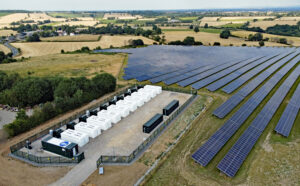
In early June, the Department for Energy Security and Net Zero (DESNZ) launched a call for evidence to determine how community batteries – shared storage facilities typically sized in the tens or hundreds of kilowatt‑hours – could help households store cheaper renewable power and smooth demand peaks across entire neighbourhoods.
The consultation runs until 30 July and solicits input from electricity network companies, installers, suppliers, local authorities, social housing landlords and community energy groups.
Interest in community batteries has grown alongside rooftop solar and electric vehicles. While many homeowners can install a domestic battery to store excess solar generation, such systems remain expensive and require private roof space. Renters, flat dwellers and those in social housing are often excluded.
A community battery sits in a communal location, allowing multiple households to store locally generated power or buy cheap electricity during off‑peak hours and draw on it when prices spike. Because batteries can charge and discharge rapidly, they also provide grid services such as frequency response.
The government’s consultation seeks to gather evidence on the commercial, regulatory and safety barriers to deploying these systems at scale. It will examine questions such as who owns and operates the batteries, how costs and benefits are shared among users, and how safety standards can be ensured.
The call invites case studies and data from existing pilot projects and asks respondents to suggest where regulation or market rules may need to change.
Benefits and barriers
DESNZ notes that there are only a dozen or so planned or operational community battery projects in the UK, but early results indicate they can reduce peak electricity demand, store excess solar PV output and earn export revenues.
Crucially, they extend these benefits to households that cannot install their own systems. The consultation asks whether community batteries should be allowed to provide multiple services – such as balancing services, time‑of‑use arbitrage and local energy trading – and how revenues should be allocated.
Energy Minister Michael Shanks told Solar Power Portal that community batteries “could give renters and people in flats the opportunity to store cheap, clean power” and help reduce reliance on fossil fuel markets.
Shanks said pilot projects have shown they lower bills and ease grid congestion, and that the government wants to hear from industry and communities on how to unlock the technology. The consultation will also examine safety – a critical consideration given that batteries can pose fire risks if poorly designed or maintained.
Flexible systems for a changing grid
The focus on community batteries comes as the UK electricity system prepares for rapid growth in renewable generation and electrification. National Grid ESO’s Future Energy Scenarios project predicts that flexible resources such as batteries, demand response and interconnectors will be essential to balance supply and demand as coal generation disappears and electric vehicles proliferate.
The government’s Clean Power Action Plan includes a goal of 10-12 GW of flexible capacity by 2030, and community storage could play a role.
Demand spikes are not just hypothetical. Analysts highlighted by the Institute of Materials, Minerals and Mining (IOM3) have warned that electricity demand could increase by around 600 MW for each Scotland and England group match during the 2026 FIFA World Cup, with the tournament potentially adding 18 GW to national demand.
While improved TV efficiency means total consumption may still be lower than during the 1998 World Cup, such peaks underscore the need for flexible resources. Community batteries, along with large‑scale pumped hydro and grid‑scale batteries, could help manage these surges.
Key questions include whether distribution network operators should be allowed to own batteries (potentially crowding out private investment), how to ensure that benefits accrue to low‑income households rather than affluent early adopters, and how to standardise contracts and safety standards.
The UK’s experience with rooftop solar and heat pumps shows that policy design matters. Feed‑in tariffs and grants drove early adoption but created windfall profits for some while leaving renters behind. Getting community batteries right could democratise access to energy storage and enhance grid resilience.
Conversely, poor design could lead to underutilised assets or safety incidents that undermine confidence. Stakeholders now have an eight‑week window to ensure the government hears their views.