
- A coalition of electrical safety bodies has urged the UK government to pause the rollout of plug‑in solar panels until comprehensive safety standards are in place.
- The bodies highlight risks such as residual-current devices and circuit breakers not being designed to handle reverse power flow, old wiring potentially overheating, unclear standards for multiple interconnected units, and difficulties ensuring safe disconnection.
- In March, DESNZ announced plans to make plug‑in solar panels available in shops within months, updating wiring regulations to permit households to connect units under 800W to standard sockets without an electrician.
As the UK government prepares to legalise plug‑in solar panels – small photovoltaic units that connect directly into a domestic socket – leading electrical safety organisations are sounding the alarm.
In a joint statement, the Electrical Contractors’ Association (ECA), Electrical Safety First (ESF), the Institution of Engineering and Technology (IET), certification body NICEIC and Scottish trade association SELECT called for a moratorium on mass market rollout until clear product standards and installation guidance are established.
Their intervention pits safety concerns against the government’s ambition to accelerate clean energy access for renters and apartment dwellers.
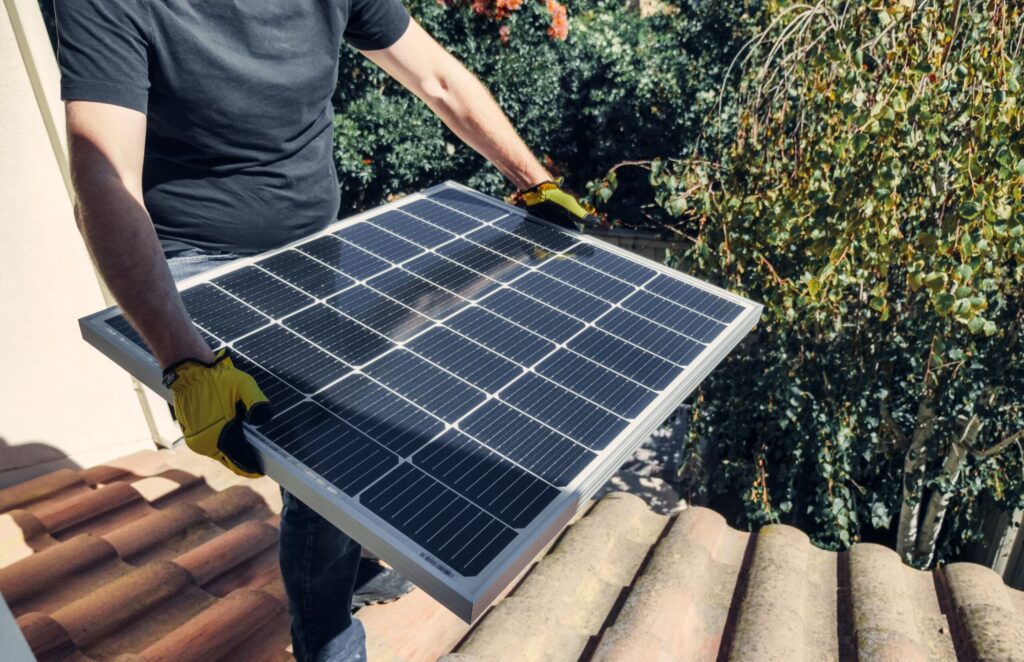
Plug‑in solar systems, sometimes called ‘balcony solar’ kits, consist of one or more small photovoltaic panels connected via an inverter to a standard domestic socket. Unlike conventional rooftop systems that require professional installation and a dedicated circuit, these kits can be bought off the shelf and installed by consumers.
When the sun shines, the system feeds electricity into the home’s wiring, reducing the amount of power drawn from the grid. Any surplus may backfeed into the local network if the meter allows it.
Safety bodies say this reversal of power flow poses a problem, as domestic circuits and protective devices were designed for unidirectional current.
In their joint statement, the ECA and partners warned that residual‑current devices (RCDs) and residual‑current breakers with over‑current protection (RCBOs) may not work correctly if current is flowing both ways, potentially leaving occupants without essential protection against electric shock. They also cautioned that ageing wiring, common in many UK homes, may be unable to handle the heat generated by backfeeding, raising the risk of fire.
The statement listed other concerns: the lack of clear standards for daisy‑chaining multiple units, the possibility of cheap imported products that do not meet UK regulations entering the market, and uncertainty over liability and insurance should a fault occur.
Government’s plan and industry context
Despite these warnings, ministers are pushing ahead. In a March press release, DESNZ announced that plug‑in solar panels will be in shops “within months” as part of its drive to increase home‑grown power in response to the energy crisis.
The government plans to update the G98 distribution code and wiring standard BS 7671 to allow households to connect plug‑in panels under 800 W to domestic sockets without an electrician, while introducing tailored safety standards.
Supporters argue that plug‑in solar can democratise access to renewables. The devices are popular in Germany, where around half a million were installed in 2025, and retailers such as Lidl and Iceland plan to stock them in the UK. Proponents say the kits are inexpensive compared with traditional rooftop systems and allow renters to reduce bills and carbon footprints.
However, industry experts interviewed by the Fire Industry Association emphasise that the convenience of a plug‑in solution should not trump safety. They note that the UK’s electrics differ from continental systems and that competency checks are necessary to ensure installations meet regulations.
They also warn that marketing plug‑in solar as a quick fix may encourage unqualified DIY installations, increasing the likelihood of faults. Electrical Safety First acknowledges the potential benefits but stresses that the technology should not be rolled out at scale until wiring regulations are updated and new product standards enforced.
Energy poverty
The debate over plug‑in solar illustrates a broader challenge for the energy transition: how to balance rapid deployment of new technologies with safety and consumer protection. Plug‑in systems could help tackle energy poverty, particularly among renters and low‑income households who cannot install rooftop panels.
They align with the government’s Clean Power mission to reduce dependence on imported fossil fuels and could, in principle, contribute to demand flexibility when paired with time‑of‑use tariffs.
However, the UK’s domestic electrical infrastructure varies widely in age and quality. Rolling out plug‑in solar without stringent standards could lead to electrical faults, fires or injuries that undermine public confidence in home renewables.
The government’s plan to update wiring regulations and set safety standards is a start, but experts want assurances that the standards will account for reverse power flow, device certification and installer competence. There are also questions about how households will be compensated for exported electricity and whether network operators are ready for large numbers of micro‑generators.