
- Five projects led by National Grid and its electricity distribution arm have secured more than £1 million in funding from the latest cycle of Ofgem’s Strategic Innovation Fund (SIF), which awarded £22.9 million to 18 projects across the UK.
- Projects address challenges from rising electricity demand due to data centres, electrification and offshore wind, focusing on digital tools, artificial intelligence and environmental restoration.
- National Grid says innovation is essential to build a flexible, resilient network while keeping costs down. The SIF programme provides a staged pathway from concept to deployment, encouraging collaboration between network operators, academia and start‑ups.
National Grid has secured more than £1 million in new funding from Ofgem’s Strategic Innovation Fund (SIF) to explore solutions ranging from AI‑powered maintenance to robotic seabed restoration. The grants were among £22.9 million awarded to 18 projects in cycle five of the SIF programme.
The largest share of National Grid’s new funding will go to the AMPERES project, which receives £456,027 to trial an automated marine habitat restoration system.
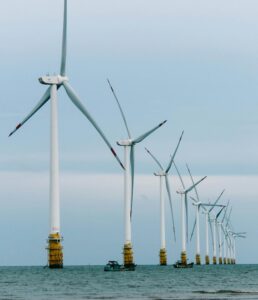
Offshore wind farms require extensive subsea cables, which disturb seabed ecosystems and create habitat loss. AMPERES will test robotic seagrass planting techniques to restore marine habitats, potentially providing both environmental benefits and improved cable protection.
The project reflects a growing recognition that energy infrastructure and biodiversity must be managed together.
Another project, FoSMo, secures £355,985 to develop artificial intelligence models for asset monitoring across the transmission system. AI algorithms will analyse data from sensors on substations, transformers and cables to predict failures and optimise maintenance schedules.
National Grid hopes the tool will reduce downtime, extend asset life and cut costs. Similar predictive maintenance systems are already used in aviation and manufacturing; adapting them to critical energy infrastructure could revolutionise grid operations.
The FLARE project (£124,391) addresses the surge in electricity demand from hyperscale data centres. It aims to develop processes that allow data centres to connect to the transmission network faster and more efficiently, potentially using temporary connections or flexible grid services.
PROMUPS (£138,674) will create probabilistic models to support network planners in deciding where and when to upgrade infrastructure under uncertainty. NGED’s Matchmaker (£147,000) is a digital tool that pairs renewable developers with local community energy groups, helping them share revenues and resources.
Innovation pipeline
The SIF programme, run by Ofgem and administered by Innovate UK, uses a staged funding approach: projects move from discovery to alpha to beta phases, with increasing grants at each stage.
National Grid’s projects have already completed feasibility studies and will now refine prototypes and prepare for trials. Successful outcomes can then be rolled into the companies’ regulated business plans or spun off into commercial ventures.
Ofgem’s director of strategy, Marzia Zafar, said the SIF’s mission is to “de‑risk cutting‑edge ideas” and ensure consumers benefit from innovation.
National Grid emphasises that innovation is no longer optional. Data centre electricity demand is surging as artificial intelligence and cloud computing proliferate, while electrification of heat and transport is adding load to networks that were built for one‑way flows.
Offshore wind farms and interconnectors require new ways of balancing variable generation. By investing in AI, probabilistic planning and nature‑based solutions, National Grid hopes to build a network that is both resilient and sustainable.
Wider context
The SIF grants are part of a broader push to modernise the UK’s energy infrastructure. Ofgem’s price controls set baseline funding for network operators, but regulators recognise that incremental upgrades are not enough. The SIF encourages collaboration among utilities, universities, start‑ups and environmental groups.
For example, the AMPERES project will work with marine ecologists to ensure that seabed restoration is effective and does not inadvertently harm ecosystems.
Other winners in this round include projects on hydrogen blending, robotic inspection of gas pipes and digital twins for grid management. Across all sectors, the SIF cycle awarded £22.9 million. These investments send a signal to investors and supply chains that innovation remains a priority even amid economic headwinds.
The National Grid projects also point to a convergence of disciplines. The combination of ecological restoration, machine learning and network engineering reflects a future where energy infrastructure must be integrated with environmental stewardship and data‑driven decision‑making.