
- Field has reached financial close on the 39 MW / 200 MWh Keith battery in Scotland and the 200 MW / 800 MWh Hartmoor project in northeast England.
- Keith will provide five hours of storage and target congestion around Scotland’s heavily constrained B4 transmission boundary; it is due online in 2027.
- The four-hour Hartmoor project is expected to support Dogger Bank offshore wind and provide flexibility as Hartlepool nuclear power station approaches retirement.
UK battery developer Field has secured financing for two projects totalling 239 MW and 1 GWh, moving some of Britain’s largest longer-duration lithium-ion storage assets into construction.
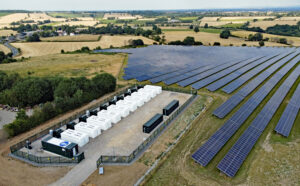
The portfolio comprises the 39 MW / 200 MWh Keith project in Scotland and the 200 MW / 800 MWh Hartmoor development near Hartlepool. Keith is expected to begin operating in 2027, followed by Hartmoor in 2028. Together, the projects increase Field’s operational and construction-stage portfolio to approximately 490 MW / 1.5 GWh.
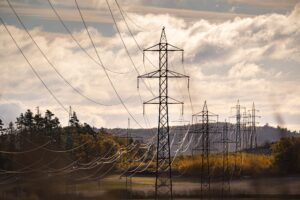
Keith is designed as a five-hour battery and will be located north of the B4 transmission boundary, a heavily congested corridor across central Scotland. The project should be able to absorb excess renewable power when network capacity limits electricity flows south, before returning energy to the grid when conditions allow.
Chinese manufacturer Sungrow will provide the battery system, while Scottish civil engineering contractor RJ McLeod will deliver the balance-of-plant works. ING and Rabobank are providing the debt financing. Field has described Keith as the longest-duration battery project to reach financial close in Great Britain to date.
Hartmoor will have four hours of storage and is strategically positioned close to two significant changes in the northeast electricity system. The 3.6 GW Dogger Bank offshore wind development is connecting to the region’s network, while EDF’s Hartlepool nuclear power station is approaching the end of its operating life. Hartmoor is intended to capture low-cost electricity when renewable output is abundant and provide balancing, stability and capacity services at times of tighter supply.
The project will use batteries supplied by Envision Energy, with H&MV Engineering responsible for balance-of-plant delivery. ABN AMRO and Rabobank are providing a term loan, letter-of-credit facility and debt-service reserve facility, according to Field’s financing adviser Elgar Middleton.
Both projects will be dispatched through Field’s Gaia optimisation platform. Their revenues will also be supported by day-ahead swaps with creditworthy counterparties, giving lenders greater visibility over part of the projects’ future cash flow while retaining access to wholesale and balancing-market upside.
Field chief executive Amit Gudka said the projects took the company to four large-scale batteries under construction, alongside an expanding operational fleet. Infrastructure investor CVC DIF has also provided additional backing, with Field saying its total debt and equity raised for European flexibility projects now exceeds £500m.
Novel financing
The financial structure is arguably more important than the headline capacity. Battery revenues are exposed to volatile wholesale spreads, ancillary-service prices and competition from other storage assets. That uncertainty has historically made lenders cautious, particularly as Britain’s market has become crowded with short-duration batteries.
The use of day-ahead swaps shows how developers are adapting. By contracting part of the revenue stack, Field can reduce risk sufficiently to attract conventional bank debt while preserving flexibility to trade across multiple markets. That could offer a template for other four and five-hour projects seeking finance without a full government-backed revenue guarantee.
The projects also illustrate the move away from batteries designed primarily for rapid frequency response. Keith and Hartmoor are large enough to shift meaningful quantities of energy between periods, address network congestion and cover longer evening peaks.
The battery systems will come from Sungrow and Envision Energy, underscoring the UK’s continuing dependence on Asian equipment manufacturers. British and European contractors are participating in engineering and construction, but the highest-value battery technology remains largely imported.
For the electricity system, location will matter as much as capacity. Keith targets Scotland’s north-south transmission bottleneck, while Hartmoor sits between major offshore wind additions and retiring nuclear generation. These are not simply batteries connected wherever land and grid access are available: they are increasingly being positioned around identifiable system needs.