
- Abu Dhabi’s XRG and Italy’s Eni have agreed to acquire 32% stakes each in three upstream blocks in Argentina’s Vaca Muerta shale basin, one of the world’s largest shale formations. State‑controlled YPF will retain a 36% stake.
- Gas from the Meseta Buena Esperanza, Aguada Villanueva and Las Tacanas blocks will feed Argentina’s planned 12 million tonne per year (mtpa) LNG export project, which will use floating liquefaction units.
- The deal advances President Javier Milei’s ambition to turn Argentina into a major LNG exporter and attract foreign currency. XRG said the investment helps build its portfolio toward 20-25 Mtpa of LNG by 2035, while Eni sees it as part of a resilient global gas platform.
Argentina’s long‑awaited entry into the global LNG club inched closer this week as two heavyweight international investors – Abu Dhabi’s XRG and Italy’s Eni – agreed to take 32% stakes respectively in three shale gas blocks in the country’s Vaca Muerta basin.
The stakes will supply gas to a 12 mtpa floating LNG project envisioned by President Javier Milei. State-controlled YPF will retain a 36% interest, ensuring domestic control as Argentina courts foreign capital to transform its vast shale resources into export revenues.
The agreement covers the Meseta Buena Esperanza, Aguada Villanueva and Las Tacanas blocks, located in the prolific Vaca Muerta formation. XRG, the international arm of ADNOC, and Eni will fund drilling and development in exchange for 32% equity in each block, while YPF retains a controlling stake.
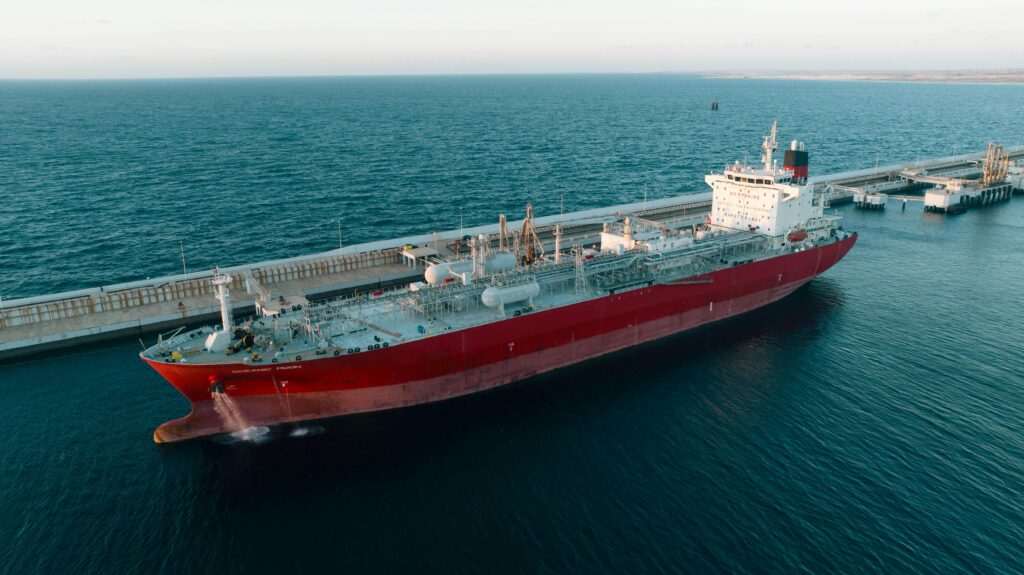
Gas from the blocks will be transported to floating liquefaction units off Argentina’s Atlantic coast, part of a planned 12 mtpa LNG export terminal. The floating concept allows Argentina to bypass some onshore infrastructure bottlenecks and bring exports online faster than a traditional land‑based plant.
For XRG, the deal is a strategic extension of its global gas ambitions. The company, spun off from Abu Dhabi National Oil Company to pursue international energy investments, aims to build a portfolio of 20-25 mtpa of LNG production by 2035.
XRG president of international gas Mohamed Al Aryani said the investment gave the company a direct role in the development of a significant new LNG supply source.
“Argentina has the potential to play an increasingly important role in meeting the world’s growing demand for natural gas, and projects such as Argentina LNG will be important to unlocking that opportunity,” he said.
Eni also emphasised diversification, noting that the partnership would bolster its integrated LNG platform and help meet growing demand in Asia and Europe.
Diversifying global gas supply
Discovered in 2010, Vaca Muerta holds some of the world’s largest shale gas and oil reserves. While Argentina has produced oil from the formation for years, its gas potential remains under‑developed due to infrastructure constraints and policy uncertainty.
The Milei administration has promised to streamline permitting and offer incentives to attract investment. A successful LNG project could transform Argentina into a significant supplier of gas to global markets, potentially rivalling the US, Qatar and Australia and reducing Europe’s reliance on North American LNG and Middle Eastern cargoes.
The stakes for Argentina are high. The country is grappling with a chronic shortage of foreign currency, high inflation and fiscal deficits. LNG exports would provide much‑needed dollars, supporting the peso and funding public services.
For Europe and Asia, additional supply could diversify imports and temper price spikes. Analysts note that floating LNG projects can be built in three to four years, meaning exports could start by the late 2020s – just as several European long‑term LNG contracts expire.
Despite the opportunity, challenges abound. Building pipelines to connect the inland shale fields to the coast will require billions in investment, while environmental groups in Argentina have warned that increasing fracking could harm water resources and local communities.
Global LNG markets are also cyclical; if supply outpaces demand, prices could fall, undermining project economics. Then there is political risk: Argentina has a history of shifting energy policies, and a future government could alter contracts or taxation.
It remains to be seen how quickly XRG and Eni can bring the project to final investment decision, and whether Argentina’s regulatory environment remains stable. Ultimately, the deal underscores how shale gas is shaping global geopolitics: from the Permian Basin to the dry pampas, producers are racing to tap unconventional resources before demand plateaus.