
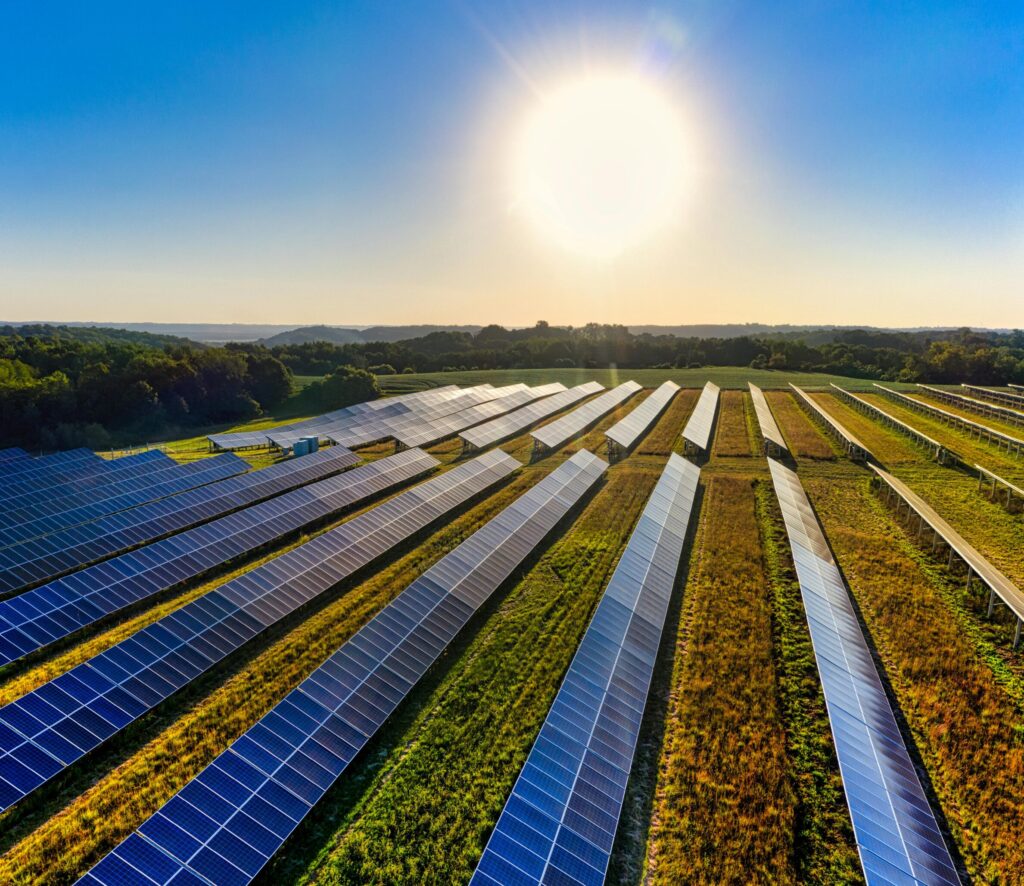
- The UK government has granted development consent for One Earth Solar Farm, a major solar and battery storage project on land around the River Trent in Nottinghamshire and Lincolnshire.
- The project is expected to become the UK’s second-largest solar farm and could generate enough electricity to power more than 200,000 homes a year, according to the developer.
- Local authority documents put the scheme’s generation capacity at 740 MW, with a grid connection via the former Marnham Power Station site in Bassetlaw.
The UK government has approved One Earth Solar Farm, clearing the way for what ministers say will be the country’s second-largest solar farm and marking another major step in the rapid expansion of nationally significant clean energy projects.
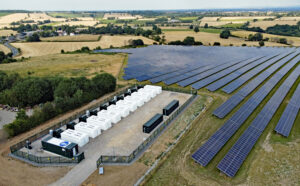
The Department for Energy Security and Net Zero (DESNZ) said the project, approved on Tuesday, could generate enough electricity to power more than 200,000 homes a year, equivalent to around half the homes in Lincolnshire. The scheme includes a solar photovoltaic generating station and co-located battery energy storage, allowing electricity to be generated, exported and stored at a capacity above the 50 MW threshold for nationally significant infrastructure projects.
One Earth Solar Farm plans to build the project across land in Nottinghamshire and Lincolnshire, with Bassetlaw District Council noting that the solar farm crosses the areas of West Lindsey, Bassetlaw and Newark & Sherwood. The project will connect into the national electricity grid through infrastructure at the former Marnham Power Station site, a symbolic reuse of old fossil-generation grid infrastructure for new low-carbon capacity.
The decision is the latest in a run of large-scale solar approvals. DESNZ said One Earth follows approvals for Peartree Hill and Dean Moor solar farms and takes the number of nationally significant clean energy projects approved by the government since July 2024 to 30. PV Magazine reported that the three projects approved in a five-day period total around 1.2 GW of solar capacity, with One Earth accounting for 740 MW, Peartree Hill 320 MW and Dean Moor 150 MW.
Planning Inspectorate documents show the application was submitted on 27 February 2025 and accepted for examination on 27 March 2025. The examination allowed local people, councils, statutory consultees and other interested parties to give evidence, with recommendations sent to the Secretary of State on 8 April 2026. The Planning Inspectorate said the decision was made within the statutory timetable under the Planning Act 2008.
Ministers are presenting the approval as part of a wider push to accelerate clean power and reduce exposure to international fossil fuel markets. DESNZ said global instability, from Ukraine to the war in Iran, had exposed the cost of relying on imported fossil fuels, while solar remained one of the cheapest forms of power available.
The department also pointed to recently announced planning reforms that will remove mandatory pre-application consultation requirements for some major infrastructure projects, arguing these could cut up to 12 months from planning timelines.
Pressure points
The One Earth approval is important not simply because of its size, but because it reinforces the government’s willingness to approve large rural solar projects through the nationally significant infrastructure regime. That matters for developers, investors and grid planners because the UK’s clean power target depends on a steep increase in solar deployment, not just offshore wind.
However, the project also illustrates the pressure points in the next phase of the transition. Large-scale solar increasingly requires co-located batteries, strong grid connections and careful land-use management. The High Marnham connection is strategically useful, but the wider pipeline will still depend on whether grid capacity, transmission reinforcement and distribution network planning can keep up.
The timing is also commercially significant. Allocation Round 8 of the CfD scheme opens on 20 July, and the latest solar consents have arrived just before that auction window. With the UK targeting at least 45 GW of solar capacity by 2030, up from 22.6 GW in provisional deployment figures to May 2025, the approval strengthens the pipeline but also raises the stakes for auction pricing, supply-chain readiness and public acceptance.
For UK energy professionals, One Earth is best read as a marker of policy direction: major solar is now being treated as core national infrastructure, not a peripheral technology. The question is whether consenting momentum can be matched by grid delivery, storage integration and local benefit mechanisms capable of sustaining public support.