
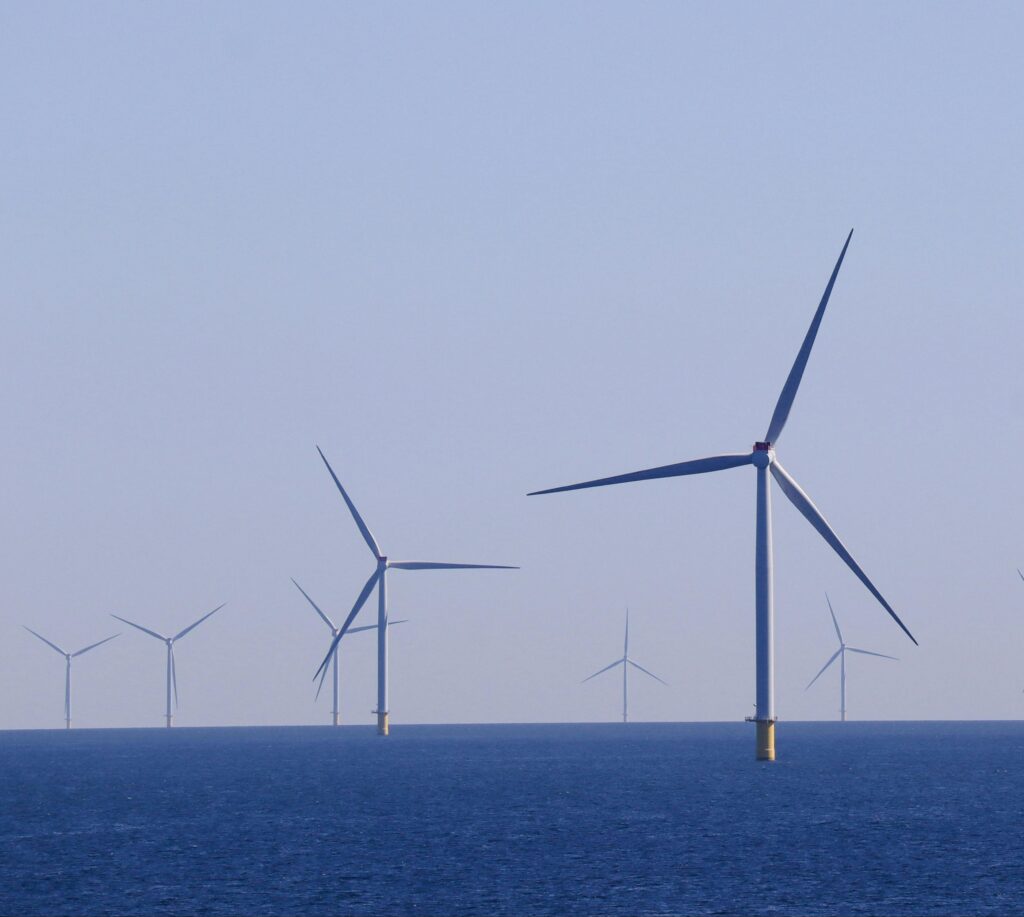
- Seaway7 is preparing to install 54 pin piles supporting the 18 jacket foundations at the 1.1 GW Inch Cape offshore wind farm.
- The Seaway Alfa Lift is expected on site around 31 August, while turbine installation is scheduled to start from Dundee in November.
- Construction progress strengthens confidence in the UK offshore pipeline, although Inch Cape also illustrates how domestic port activity can coexist with heavy reliance on imported components.
Installation of pin piles for the jacket foundations at Scotland’s 1.1 GW Inch Cape offshore wind farm is due to begin as the £3.5 billion project approaches its turbine construction phase.
Seaway7’s heavy-lift vessel Seaway Alfa Lift is expected to arrive at the site around 31 August and work for several weeks, according to an Inch Cape notice to mariners.
The contractor will install three steel pin piles at each of 18 jacket locations, creating the seabed anchor points for foundations that will support a quarter of the project’s turbines. The piles will be transported from the Port of Leith and installed using a specially designed pre-piling template.
Inch Cape is using two foundation types to accommodate different seabed conditions across the development area. 54 turbines will stand on monopiles, while the remaining 18 will use three-legged jackets secured by the pin piles.
All 54 monopiles were installed by Jan De Nul in June. Seaway7 subsequently completed installation of their 54 transition pieces, each weighing approximately 700 tonnes, during a campaign conducted from Leith.
“With this phase now complete, our focus turns to the installation of the pin piles,” said Seaway7 senior project manager Niamh Thompson.
The contract covering the jacket foundations, pin piles and transition pieces is valued by Seaway7 at between $150 million and $300 million.
Dundee prepares for turbine assembly
Attention will soon move from foundations to Forth Ports’ Dundee facility, where components for the project’s 72 Vestas V236-15 MW turbines will be marshalled and assembled.
Each turbine consists of a four-section tower, nacelle and three 115.5 metre blades. Cadeler’s new-build Wind Mover will transport the turbines offshore in batches of four, with installation scheduled to begin in November.
Cadeler’s installation contract is worth between €114 million and €130 million and covers an anticipated campaign of around 249 days.
Inch Cape will be the first UK wind farm to deploy the V236-15 MW model. Vestas is supplying, installing and commissioning the machines under a contract that also includes long-term servicing and operational support.
The wind farm, located around 15 km off the Angus coast, is owned equally by Irish utility ESB and Red Rock Renewables. More than £3.5 billion was raised at financial close in January 2025, with first power expected in late 2026 and commercial operation scheduled for 2027.
Local content question
Britain’s offshore wind debate has become dominated by auction volumes, cancellations and future manufacturing promises. Inch Cape is a standout project that has passed financial close and is converting capital into installed infrastructure.
Its progress also reflects the value of large port facilities. Leith has supported foundation work, Dundee will handle turbine pre-assembly and Montrose is due to host the project’s long-term operations base.
However, the local content picture remains mixed. Project documents show that pin piles, monopiles and several other major steel components were fabricated in China. British ports are capturing marshalling, logistics, assembly and installation activity, but much of the higher-volume manufacturing remains overseas.
As ministers attempt to use offshore wind procurement to rebuild domestic industry, this issue will remain a bone of contention. Inch Cape demonstrates that port investment can deliver substantial local work, yet it does not automatically produce a fully domestic supply chain.
The immediate test is execution. Jacket installation, array cabling and turbine erection will overlap during the closing months of 2026, creating a demanding offshore schedule. If the project reaches first power as planned, it will provide a useful counterpoint to concerns that rising costs and supply chain constraints have left the UK offshore programme unable to deliver at pace.