
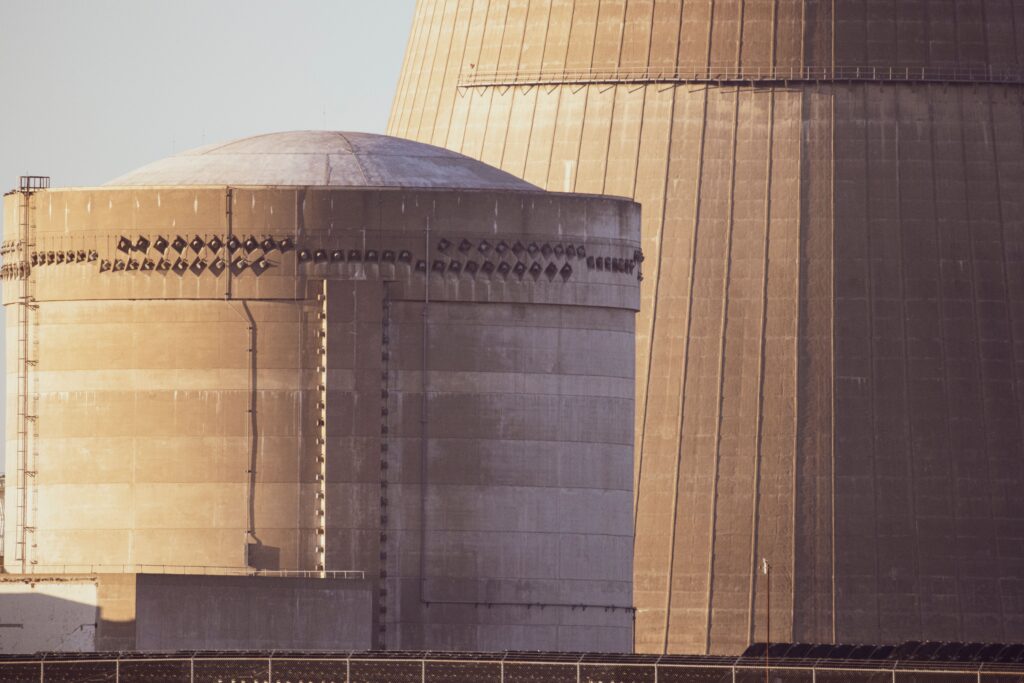
- The European Investment Bank has made its first investment in small modular reactor technology, offering Steady Energy up to €40 million.
- The Finnish company is developing a 50 MW heat-only reactor for district heating rather than electricity generation.
- The convertible loan structure gives the EIB potential equity exposure, establishing a financing precedent for high-risk nuclear technology companies.
The European Investment Bank has entered the small modular reactor (SMR) market for the first time, providing up to €40 million to Finnish nuclear technology developer Steady Energy.
The InvestEU-backed financing will fund research, testing and licensing work between 2026 and 2028 as Steady develops its LDR-50 reactor, a 50 MW thermal unit designed to supply district heating networks.
Rather than generating electricity and then converting it into usable heat, the reactor would deliver low-temperature heat directly. Steady argues that removing the turbine and other power generation systems simplifies construction, lowers operating pressure and allows a larger proportion of the reactor’s thermal output to be used.
The reactor uses established light water technology, incorporates passive safety features and is intended to be installed underground near urban heat networks.
“Over 40% of final energy demand is heat,” Steady chief executive Tommi Nyman said. “Most of the heat we consume comes from fossil fuels.”
The EIB described the transaction as part of its effort to strengthen European energy autonomy and support promising SMR developers.
Fnancing may be the real breakthrough
The investment takes the form of a senior unsecured convertible loan, with the EIB able to convert its exposure into shares following Steady’s proposed listing. Company documents describe two potential tranches of €30 million and €10 million.
Steady has separately agreed to combine with Finnish listed vehicle 3North Partners and plans an offering on Nasdaq First North Growth Market Finland. The proposed initial public offering would raise up to €5 million, alongside commitments from strategic and institutional investors.
This makes the EIB financing more than a conventional infrastructure loan. It is patient, quasi-equity capital being provided before licensing, commercial deployment or proven construction costs – precisely the development stage at which new nuclear companies find traditional project finance hardest to secure.
Steady is constructing a full-scale but non-nuclear pilot inside a former coal-fired power station at Salmisaari in Helsinki. An electric heating element will replace the uranium core, allowing the company to test thermal hydraulic performance, passive cooling and supply chain execution. Pilot operations are scheduled to begin in spring 2027. Construction began in February.
The company also completed a joint early review involving nuclear regulators from Finland, Sweden, Poland, the Czech Republic and Ukraine. The authorities identified no fundamental safety issue that would prevent further development and highlighted the design’s passive safety and defence-in-depth principles. Steady says substantially more engineering and safety analysis will be required.
The commercial opportunity is also geographically uneven. Finland, Sweden and Poland possess extensive district heating systems that could provide large, concentrated customers. Britain’s networks are smaller and more fragmented, although planned heat network zones and industrial clusters could offer future applications.
For UK policymakers, the transaction nevertheless provides a useful financing precedent. The EIB is accepting technology and licensing risk through a convertible instrument instead of waiting for a fully permitted project. Comparable UK development bank or Great British Energy structures could potentially support advanced reactors, industrial heat systems and other capital-intensive technologies before conventional lenders are willing to participate.
The €40 million will not build a commercial reactor. Its importance lies in helping to bridge the difficult space between laboratory design and an investable, licensable product.