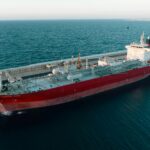


- Saudi Arabia’s East-West pipeline is expected to remain substantially offline for several weeks after drone attacks damaged infrastructure in two regions.
- The line had become indispensable because it bypasses the heavily disrupted Strait of Hormuz; flows of up to 4mn barrels a day may now be at risk.
- For the UK, the immediate threat is renewed inflation through crude, diesel and freight costs – not a physical shortage of domestic fuel.
Saudi Arabia’s principal alternative to the Strait of Hormuz could remain largely unavailable for three to five weeks, tightening an oil market whose remaining supply buffers are already being rapidly depleted.
The Kingdom shut the 1,200km East–West pipeline as a precaution after multiple drone attacks on 10 September. Saudi Arabia’s energy ministry confirmed that infrastructure in the Riyadh and Madinah regions had been targeted, while the foreign ministry said the drones had been launched from Iraq and caused injuries and material damage. Riyadh has not issued a public repair timetable.
Two regional officials subsequently told the Associated Press that substantial repairs could take three to five weeks. Reuters separately reported estimates ranging up to five or six weeks, although partial pumping might resume sooner. These assessments remain unofficial and the precise condition of the line has not been disclosed.
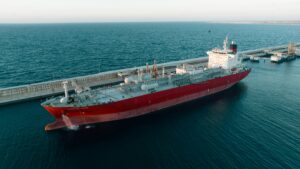
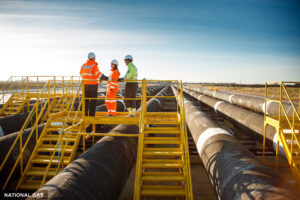
The East-West system carries crude from the Kingdom’s eastern producing region to Yanbu on the Red Sea. Its normal capacity is about 5mn barrels a day and can be temporarily expanded to 7mn b/d, according to the US Energy Information Administration.
Rystad Energy estimates that between 2.6mn and 4mn b/d had recently been moving through the route and Yanbu. The upper end is equivalent to roughly 4% of global oil supply.
Another chokepoint
The significance of the outage is greater than its nominal capacity suggests. The pipeline was designed to give Saudi Arabia export redundancy during disruption in the Gulf. But with tanker traffic through Hormuz far below pre-war levels, the emergency route had effectively become part of the base case.
Its Red Sea outlet is itself becoming less secure. Yemen’s Houthi movement has seized islands near the Bab el-Mandeb and threatened Saudi shipping, leaving the Kingdom exposed at both ends of its alternative export chain.
Industry sources cited by Reuters estimated that Yanbu held sufficient immediately available crude to sustain exports for only five to seven days. Storage figures do not translate directly into deliverable exports, but the estimate indicates how quickly a pipeline stoppage can become visible in customer allocations.
Brent crude rose more than 2% to $108.18 a barrel during European trading on 15 September.
The wider system is poorly placed to absorb another loss. The International Energy Agency said more than 10mn b/d of Gulf production remained shut in during August, while observed global inventories fell by 95mn barrels that month. Combined net exports of diesel and gasoil from the Gulf and Russia were 1.6mn b/d lower than in February.
Europe is structurally exposed to traded diesel, and the IEA estimates that European pump prices historically move with global oil prices at a correlation of about 90%. Higher diesel costs feed rapidly into road freight, food distribution and construction.
The strategic lesson is that nominal spare infrastructure is not the same as resilient supply. Saudi Arabia possessed one of the world’s largest bypass pipelines, but war has turned that single alternative into a high-value target. The next market-moving event will therefore be evidence of sustained partial pumping—not simply an announcement that repairs have begun.