- Invinity’s H1 orders nearly tripled to 34.2 MWh, while subsequent business lifted 2026 secured orders to 77.2 MWh.
- Revenue and grant income remained modest at £1.7 million, against a £12.1 million net loss and £10.5 million of net cash.
- Large projects in Switzerland and Britain could transform the company’s scale, but neither yet represents fully commissioned, recurring commercial revenue.
UK flow battery developer Invinity Energy Systems has reported rapidly growing orders and lower product losses, while acknowledging that its next phase will depend on converting a large project pipeline into cash-generating deliveries.
Customer orders rose to 34.2 MWh during the six months to June, from 11.7 MWh a year earlier. A subsequent 43 MWh contract with Dairyland Power Cooperative in the US lifted secured 2026 orders to 77.2 MWh.
Revenue and project grant income increased from £900,000 to £1.7 million. The gross loss narrowed by 62% to £700,000 as product margins and manufacturing cost absorption improved. However, the overall loss increased by 14% to £12.1 million, reflecting continued research and development expenditure. Net cash stood at £10.5 million at the end of June.
Chief executive Jonathan Marren said the results represented a move from technology development towards “commercial scale-up and execution”.
Challenge of scale
The largest opportunity is the proposed Technology Centre Laufenburg in Switzerland, where Invinity has been selected to design a 1.5 GWh vanadium flow battery system. A later phase could increase capacity to 2.1 GWh, which the companies say would make it the world’s largest flow battery.
The project would combine storage with an AI data centre and technology campus. Construction work on the wider site is under way, but Invinity’s current mandate covers engineering and project preparation. It will generate engineering revenue subject to development milestones, but should not yet be treated as a firm order for 1.5 GWh of battery equipment.
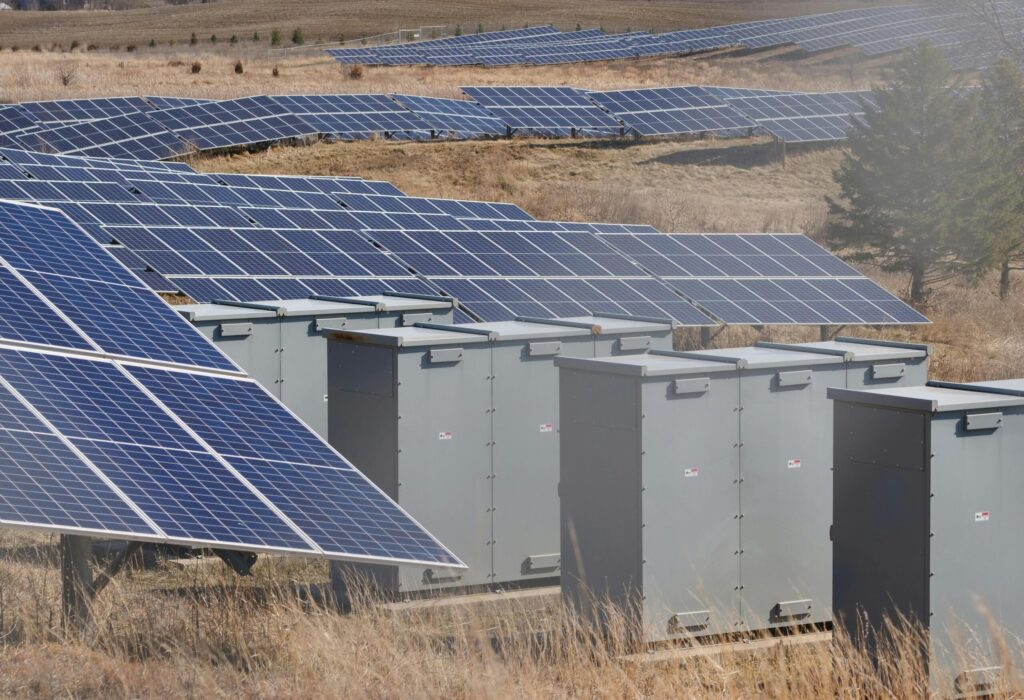
In the UK, the company has completed delivery of a 20.7MWh battery to the Copwood VFB Energy Hub in East Sussex. The installation combines 90 vanadium flow battery units with a 3 MW solar array and is expected to become Europe’s largest operating vanadium flow battery after grid connection and commissioning.
A further potential market comes from the UK’s long-duration electricity storage support scheme. Frontier Power’s Legacy project has been provisionally selected to progress under the first cap-and-floor window and is expected to contain up to 260 MWh of Invinity equipment. Ofgem’s decision is a minded-to position rather than a final construction commitment. The cap-and-floor mechanism guarantees a minimum revenue level while returning earnings above a ceiling to consumers.
The strategic case for vanadium flow batteries is that energy is stored in liquid electrolyte held in tanks, allowing power and storage duration to be scaled more independently than in conventional lithium-ion systems. The technology is intended for repeated, long-duration cycling with limited degradation, making it potentially attractive for renewable balancing and demanding industrial loads.
Its commercial challenge is manufacturing scale. Lithium-ion batteries benefit from enormous global production volumes and supply chains developed for electric vehicles. Flow battery manufacturers must demonstrate that longer life and intensive cycling compensate for higher initial costs and less mature project delivery.
Invinity says it remains on track to reduce the cost of its Endurium product by at least 66% for 2027 deliveries compared with previous generations. That target, along with the narrowing gross loss, suggests improving competitiveness. But the difference between its £1.7 million of H1 income and £12.1 million net loss illustrates the remaining financing risk.
The results are therefore evidence of commercial traction rather than commercial maturity. The decisive milestones will be commissioning Copwood, turning the Swiss engineering role into a supply contract and securing final UK support for projects capable of sustaining higher-volume manufacturing.