
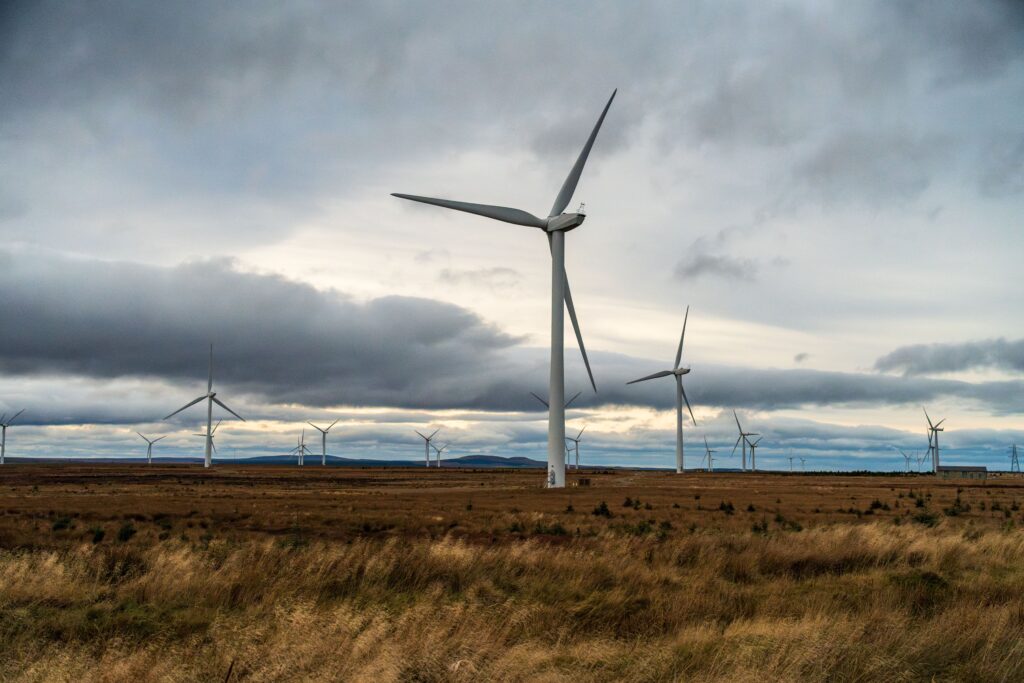
- Amazon will buy 36 MW of output from Statkraft’s eight-turbine Mossy Hill wind farm near Lerwick.
- The PPA gives the project a creditworthy long-term customer, strengthening revenue certainty ahead of operation.
- Physical delivery still depends on turbine construction, substation commissioning and sufficient network capacity to export Shetland generation.
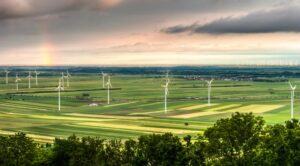
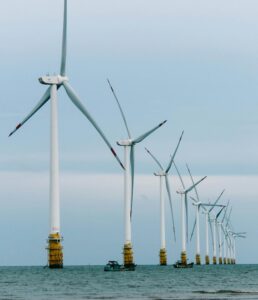
Amazon has signed a power-purchase agreement with Statkraft covering 36 MW from the Mossy Hill wind farm in Shetland, adding a named corporate customer to one of the island group’s most advanced renewable projects.
The eight-turbine onshore development is located near Lerwick and is expected to generate electricity equivalent to the annual consumption of more than 57,000 homes. Amazon said supply under the agreement was expected to become operational in November 2030.
The project was originally consented by Shetland Islands Council in 2019 with 12 turbines. A variation approved in 2026 reduced that number to eight, while retaining capacity of around 36 MW to 39.2 MW depending on the final turbine selection.
Statkraft acquired Mossy Hill in 2023 and has already started work on its associated substation. The facilities will connect into the underground Kergord-Gremista link operated by SSEN Transmission, providing access to the wider Shetland and Great Britain networks.
“We’re pleased to have agreed a partnership with Amazon”, said Statkraft UK and Ireland manager Kevin O’Donovan, adding that it gave the developer certainty to move the project forward.
Beyond revenue certainty
Power-purchase agreements provide developers with a predictable customer and revenue stream, reducing exposure to future wholesale prices.
The agreement takes Amazon’s UK carbon-free energy portfolio to more than 50 projects and more than 1 GW of capacity. Data Center Dynamics reports that 41 of those projects are solar installations at Amazon logistics sites, with the remainder comprising larger off-site wind and solar developments.
Amazon has linked the deal to more than £3 billion of UK low-carbon investment between 2021 and 2025. Frontier Economics estimated that the company’s wider spending on renewable energy, electric transport and packaging supported up to 34,000 jobs and £2 billion of gross value added. The research was commissioned by Amazon and extends well beyond electricity procurement.
There is some variation in published project timelines. Amazon’s announcement places operation in November 2030, while Statkraft’s project material has previously pointed to completion during 2029. The difference may reflect the start date of contracted supply rather than physical commissioning, but it illustrates the need to distinguish a PPA timetable from the underlying construction schedule.
Local benefits will also be closely watched. Statkraft has indicated a community fund based on £5,000 per installed megawatt, potentially providing at least £190,000 annually. Discussions have also taken place over possible community shared ownership.
The contract will certainly give the Mossy Hill project greater revenue visibility and demonstrate corporate demand for additional renewable power – but it cannot guarantee the manufacture of turbines, complete the substation or remove transmission constraints.
Shetland possesses an exceptional wind resource, but its economic value depends on the capacity to export power or use it locally. Mossy Hill will therefore be another test of whether commercial procurement and network development can remain aligned.
For Amazon, the PPA expands a portfolio intended to match the company’s electricity consumption with renewable generation. For Statkraft, it turns part of Mossy Hill’s future output into a contracted asset. The next decisive milestones will take place on the construction site and electricity network.