
- Amprion has issued two €750m green bond tranches, paying coupons of 4.398% for six years and 4.838% for ten years.
- The transmission operator plans approximately €42bn of investment by the end of 2030, including around €7bn in 2026.
- Strong demand confirms investor appetite for regulated grids, but the coupons illustrate the financing cost attached to Europe’s transmission build-out.
German transmission operator Amprion has raised €1.5bn through a dual-tranche green bond, completing its planned bond funding for 2026 as it undertakes one of Europe’s largest regulated infrastructure programmes.
The company placed €750m of six-year debt with a 4.398% annual coupon and €750m of ten-year debt paying 4.838%. Both tranches will be listed on the Luxembourg Stock Exchange’s Euro MTF market and were issued under Amprion’s €25bn debt programme.
Proceeds will be allocated to projects meeting the company’s Green Finance Framework, principally the expansion and upgrading of Germany’s transmission network. Amprion expects the securities to receive ratings of Baa2 from Moody’s and A- from Fitch.
“Green Eurobonds are a key pillar of our financing strategy,” chief financial officer Peter Rüth said in the company announcement, which reported strong investor demand.
The transaction brings Amprion’s disclosed 2026 bond issuance to €5.1bn. It raised €2.6bn through senior green bonds early in the year and €1bn from its first green hybrid bonds in April before the latest deal.
Financing the north-south power shift
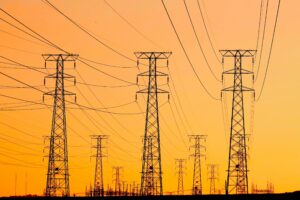
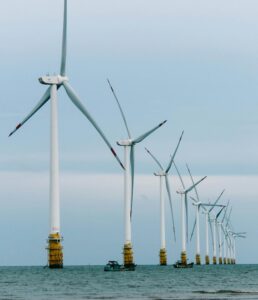
Amprion operates 11,000 km of extra high-voltage network serving about 29m people, including Germany’s industrial regions. Its central task is to transfer growing volumes of renewable electricity from northern Germany and the North Sea towards western and southern consumption centres.
The company expects to invest approximately €7bn this year and €42bn by the end of 2030. From late 2026, it intends to complete at least one major “energy corridor” annually, beginning with Ultranet, according to its half-year results.
The scale of expenditure has required a broader capital structure. Amprion refinanced and expanded its syndicated revolving credit facility to €6.5bn this year. RWE has meanwhile increased its effective interest in the company to around 58% and, according to Amprion, expects to provide about €7bn of equity by 2031.
That equity is key because the borrowing programme is stretching credit metrics, even though Amprion operates under a regulated revenue model. Moody’s downgraded the company to Baa2 with a stable outlook in April, citing the pressure its capital programme would place on funds from operations relative to debt. The agency nevertheless described liquidity as strong and noted limited refinancing requirements before 2027.
The green label provides use-of-proceeds discipline but does not eliminate financing risk. Amprion’s framework follows the International Capital Market Association’s Green Bond Principles and has a second-party opinion from Sustainalytics. Its programme documentation says the securities are not intended to carry the EU’s formal European Green Bond designation.
Wider signal for UK networks
The transaction shows that institutional capital remains available in scale for European transmission assets. It also demonstrates that this money is not cheap: coupons above 4% will feed into the lifetime cost of infrastructure whose regulated expenditure is ultimately recovered from network users.
That matters for the UK, where National Grid Electricity Transmission, SSEN Transmission and ScottishPower are embarking on similarly exceptional programmes. UK policy increasingly assumes that networks can build ahead of generation and demand, but doing so requires continuous access to bond markets as well as adequate equity from shareholders.
The central risk is shifting. Political debate has focused heavily on obtaining planning consent for new lines, but Europe must also ensure that regulated returns and consumer cost recovery remain sufficiently predictable to finance several years of record capital expenditure.
Amprion’s issue is encouraging because it was successfully placed. The coupons are a reminder, however, that delays and regulatory uncertainty raise the financing cost of the energy transition long before they appear explicitly on an electricity bill.