
- Seaham’s mine water heat network is operational and serving the first homes in a planned 750-home rollout.
- The system reuses water already pumped through the Dawdon treatment scheme, linking remediation infrastructure with low-carbon heating.
- Its wider significance will depend on measured performance, customer costs and whether the model can be repeated elsewhere.
A mine water heat network at Seaham Garden Village has completed commissioning and begun supplying homes, marking a practical milestone in efforts to transform the UK’s former coal infrastructure into a source of low-carbon heating.
The Mining Remediation Authority announced completion of commissioning on 6 October. Its updated project information confirms that the scheme went live in September and is delivering heat to the first of 750 planned homes, with capacity to expand to serve up to 1,500 in future.
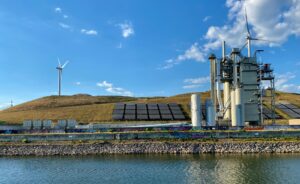
The scheme draws on naturally warm water from the authority’s existing Dawdon mine water treatment facility. Heat exchangers and a heat pump recover and raise the temperature of that energy before it is distributed to residents for heating and hot water.
Dawdon consequently has a dual purpose: continuing its water-protection role while supporting a local heat network. The project brings together the authority, Karbon Homes, Esh Construction, Vital Energi and Durham County Council.
Andrew Simpson, the authority’s head of innovation, by-products and services delivery, said: “Seaham Garden Village shows how geothermal energy from disused mines can be replicated across the country.”
Co-located resource
The planned connections serve Karbon’s affordable homes within the wider Garden Village development. In its earlier project announcement, the housing provider disclosed £4.3m of support from the government’s Heat Networks Investment Project, including £3.23m towards construction.
Durham County Council appointed Vital Energi to design, build and operate the network. Karbon also identified solar panels among the energy-efficiency measures incorporated into the new homes.
The authority estimates annual carbon savings of approximately 2,600 tonnes. That is a projected benefit, rather than a full year of measured operating results.
For heat network developers, Seaham’s strongest feature is the alignment of an accessible resource with a nearby, growing customer base. Reusing an existing treatment operation offers a different starting point from developing a heat source entirely from scratch.
However, a successful scheme at one location does not establish the economics of every coalfield site. Replication requires the right combination of water availability, access, suitable buildings, network routes and dependable demand.
The authority’s estimate that a quarter of homes and businesses lie above former coal mines indicates geographical potential. It is not a forecast that all those properties could economically connect to mine water heating. Useful measures will include electricity consumption per unit of heat delivered, network losses, reliability, maintenance requirements and customers’ total charges.
Those figures matter because a locally available heat source does not eliminate the costs of extracting, upgrading and distributing its energy. The announcement’s affordability claims cannot substitute for published tariffs and comparisons on a consistent basis.
The development remains significant in that it moves the discussion beyond resource mapping and proposed projects to actual heat delivery. Housing providers and local authorities now have another operational scheme from which to examine delivery arrangements and performance.
Seaham’s industrial heritage gives the story a compelling narrative. Its commercial importance is more practical: demonstrating whether existing remediation assets can anchor dependable, affordable heat networks – and providing evidence that helps the next project proceed with fewer unknowns.