

- Labour MP Andy Burnham, widely seen as the UK’s likely next prime minister, has set out a ten‑year mission to devolve power from Whitehall. He pledged to shift political decision‑making to the regions and vowed to deliver the largest council‑house‑building programme in decades.
- Burnham said he would give local authorities greater control over water, energy and transport infrastructure, arguing that essential services should be “under the people’s control.” He has previously suggested bringing energy distribution networks under municipal or regional management.
- The speech outlined a goal of “good, inclusive growth” that focuses on reindustrialising Britain, building social housing and creating well‑paid jobs in green industries. He emphasised that decentralisation would be financed within existing fiscal rules, promising not to raise taxes.
Standing on the podium at Manchester’s People’s History Museum, Andy Burnham delivered what many observers saw as his first audition for Downing Street.
“We will build a Number 10 in the North,” he declared, promising the biggest transfer of power from Whitehall in modern times. Burnham’s speech sketched a vision of a Britain where councils take charge of water, energy and transport, and where a decade‑long state‑led industrial strategy revives manufacturing and builds hundreds of thousands of social homes.
Behind the rhetoric lies a radical plan to upend decades of privatisation and centralisation.
Radical devolution blueprint
Burnham’s proposals are rooted in the belief that Britain’s “top‑down” model has failed. He argued that local decision‑making is essential for delivering what he calls “good growth” – economic progress that spreads prosperity and tackles inequality.
To that end, he pledged to create a Number 10 North in Manchester as a northern nerve centre for the prime minister’s office. This would accompany a decentralisation of ministries and agencies, echoing earlier moves such as relocating the Office for National Statistics to Newport.
The speech also promised to give local governments more control over water, energy and other utilities, a theme Burnham has championed since Greater Manchester confronted sewage and supply crises.
Guardian reporting has revealed that his allies have drawn up plans for a ten‑year takeover of utilities: failing water companies would be brought into public ownership as they enter administration, while more successful firms would be transformed into municipal or co‑operative models where communities and workers have representation.
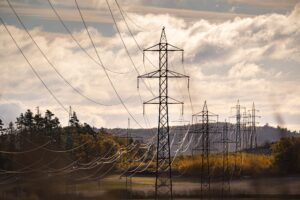
Electricity distribution networks and grid operations would also be municipalised, though generation would remain in private hands. Burnham insists this approach would not involve sweeping nationalisation or tax rises; rather, he would finance takeovers through existing borrowing mechanisms and the revenue of the companies themselves.
Reindustrialisation and ‘good growth’
Beyond utilities, Burnham unveiled a ten‑year reindustrialisation mission. He wants to direct investment into clean technologies, expand Britain’s manufacturing base and deliver the largest council‑house‑building programme since the 1970s.
He promised a “good growth” agenda that prioritises jobs with fair wages and invests in green infrastructure. Burnham’s model draws inspiration from Germany’s regional development banks and from Berlin and Paris, where utilities are run by municipally controlled companies.
Business groups and economists offered mixed reactions. Some praised the focus on regional growth and infrastructure, noting that the UK’s centralised decision‑making has left many regions under‑funded. However, there are concerns about the practicalities of relocating government agencies outside London; past relocations have struggled to attract skilled staff and maintain standards.
Critics also question the affordability of bringing utilities into public ownership without raising taxes, warning that the plan could burden the Treasury or lead to higher borrowing costs.
Policy think‑tanks welcomed the emphasis on public control of essential services. The New Economics Foundation said Burnham’s call for public ownership of water, housing, energy and transport could reset the UK economy and move away from market‑driven models.
Yet others caution that devolution must be accompanied by fiscal autonomy; without new revenue sources, councils may struggle to invest in infrastructure.
Implications for energy
For energy companies, Burnham’s programme could herald significant changes. Regional authorities might gain control over distribution networks, planning decisions and energy efficiency schemes. A municipal ownership model could lower returns but provide more stable, long‑term investment horizons.
The focus on industrial strategy suggests that the next government would expand support for renewable manufacturing, grid upgrades and storage. However, there is a risk that political battles over ownership distract from urgent investments needed to modernise the grid and reach net‑zero targets.
Ultimately, Burnham’s speech reflects a growing demand for a more equitable energy transition – one that places public interest above private profit.