

- EnEarth has agreed to acquire Storegga’s 30% stake in Acorn and take over as lead developer, with the deal expected to close by year-end.
- The buyer is targeting a final investment decision around 2029, with CO₂ storage potentially starting in the early 2030s.
- Further UK government support is expected to take the form of loans or equity, subject to a business case.
EnEarth has agreed to buy Storegga’s 30% stake in Acorn and take over development of Scotland’s flagship carbon capture and storage scheme (CCS). The deal gives the St Fergus project a lead developer with experience converting depleted offshore fields to CO₂ storage as Acorn works towards an investment decision.
The transaction is expected to close by the end of the year, with Storegga staff working on Acorn due to join the enlarged EnEarth group. The companies did not disclose the purchase price.
EnEarth chief executive Nikolas Rigas told the Financial Times he was aiming for a final investment decision around 2029, potentially allowing the project to begin storing carbon in the early 2030s.
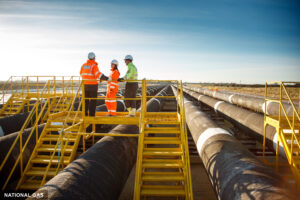
Acorn is the transport and storage system at the centre of the Scottish Cluster. It would take CO₂ captured at industrial sites, move it through St Fergus in Aberdeenshire and inject it into depleted reservoirs beneath the North Sea. The project proposes to reuse offshore oil and gas infrastructure, while National Gas’s separate SCO₂T Connect project would repurpose an onshore pipeline to connect emitters in Scotland’s Central Belt.
“Acorn is a project of strategic importance to Scotland’s industrial decarbonisation and the wider European energy transition,” Rigas said, according to local reports.
EnEarth was established by oil and gas producer Energean and now operates independently, with technical support from its former parent. It is developing the Prinos storage project in Greece and working on a CO₂ transport and storage scheme in Bulgaria with Heidelberg Materials.
Financing the whole chain
The UK government announced up to £200 million of development funding for Acorn in its 2025 Spending Review. In an October parliamentary answer, ministers said grant funding had been allocated in line with project needs, while further support would move to loans or equity designed to generate a return for the taxpayer, subject to a business case.
The distinction matters for Acorn’s next phase, when the developer must turn engineering work into a proposition that can attract construction finance.
There is a timing challenge on both sides of the pipeline. An industrial emitter needs confidence that transport and storage will be available when its capture equipment is ready. The storage operator needs confidence that enough customers will commit volumes to justify the network.
Reusing infrastructure can reduce the amount of new construction, but both sides still need compatible schedules and commercial terms before they can commit capital.
EnEarth’s work in Greece and Bulgaria gives it a basis for pursuing a wider European storage business and Acorn could eventually serve emitters beyond Scotland. For the Scottish Cluster, the nearer-term question is whether the new owner can bring initial customers, government support and the connecting infrastructure together in time for the proposed 2029 decision.
That is the milestone industrial companies can use to judge when Acorn might become an option for their own investment plans.