

Ofgem has approved £642.1 million for National Grid Electricity Transmission’s Bramford–Twinstead grid reinforcement, after cutting £60.6 million from the company’s requested funding allowance.
The decision, announced on 19 October 2026, supports an upgrade to the electricity transmission network between Suffolk and Essex. The project will provide capacity for more low-carbon and renewable generation in East Anglia to connect to the grid and help accommodate future electricity demand.
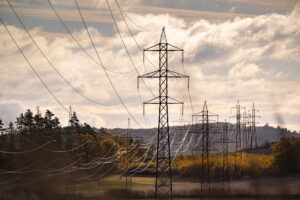
The works comprise 18km of new overhead line, 11km of underground cable, a new substation at Twinstead Green and upgrades to the existing Bramford substation.
Bramford–Twinstead forms part of NGET’s Great Grid Upgrade programme. It is also covered by Ofgem’s Accelerated Strategic Transmission Investment framework, known as ASTI, which fast-tracks 26 strategically important electricity transmission projects.
Additional capacity to reduce grid bottlenecks
Ofgem said the reinforcement would help reduce the cost of managing constraints on the electricity network. These occur when the grid lacks sufficient capacity to transport available generation to where electricity is needed.
When this happens, wind generators can receive payments to reduce their output. Expanding transmission capacity allows the system to accommodate more of that generation, reducing the need to curtail production.
The economic case therefore extends beyond connecting new power projects. Additional network capacity can also improve the use of generation already available, although the scale of that benefit depends on the bottlenecks addressed and the timing of delivery.
Ofgem did not quantify the constraint-cost savings expected specifically from Bramford–Twinstead in its announcement. It also did not state how much additional transmission capacity the project would provide or give a completion date.
The regulator said better use of Britain’s renewable resources would strengthen energy security and reduce exposure to volatile international gas markets.
Funding cut reflects scrutiny of proposed costs
NGET’s requested allowance totalled £702.7 million. Ofgem’s £60.6 million reduction represents approximately 8.6% of that amount, leaving the approved package at £642.1 million.
The distinction matters when assessing the regulator’s consumer-savings claim. The reduction lowers the project allowance relative to NGET’s request; it does not represent an equivalent immediate reduction in household energy bills.
Nor should it be confused with the separate savings expected from reducing network constraints. One concerns the amount allowed for investment, while the other concerns the future cost of operating the electricity system.
Beatrice Filkin, Ofgem’s Director of Major Projects, said:
“Britain needs a bigger, stronger electricity grid to connect more homegrown clean power, strengthen energy security and reduce the bottlenecks that can add costs to the system. The cost of building this infrastructure now will be less than the longer-term cost of doing nothing.
“But every penny invested must deliver value for consumers. We’ve assessed NGET’s proposed project budget and cut £60.6 million from it, making sure this vital upgrade can go ahead whilst also protecting consumers from any unnecessary costs.
“This decision supports the investment needed to modernise Great Britain’s grid and to deliver cleaner power and value for money for the British consumer.”
Further allowances will require evidence
Approval of the funding package does not end regulatory oversight. Ofgem said it would continue to scrutinise spending through the relevant regulatory processes.
Any future allowances will be assessed against whether the costs are necessary, efficient and supported by evidence. That leaves NGET responsible for demonstrating the case for further funding, rather than treating this decision as an unrestricted commitment.
For the wider transmission programme, Bramford–Twinstead illustrates the balance ASTI is intended to strike: accelerating infrastructure needed to accommodate changing electricity supply while retaining scrutiny of what network companies charge consumers.
The practical outcome will depend on delivery. Funding approval enables the investment to advance, but the operational benefits will follow when the additional infrastructure becomes available.