
- Saudi Arabia is reportedly in preliminary talks with Kuwait, Bahrain and Qatar about expanding capacity of the East-West crude pipeline by up to two million barrels a day, possibly by adding a second pipe for refined products.
- The East-West line has become the Gulf’s only secure oil route since the war in Iran shuttered the Strait of Hormuz. Expansion would bypass the chokepoint and protect exports from further attacks, but would take years and cost billions.
- Gulf producers, including the UAE, are already building alternative corridors; analysts warn that a race to build new pipelines may lead to a price war by boosting capacity once the conflict ends.
Saudi Arabia is mulling an expansion of its East-West oil pipeline that would boost the volume of crude and refined products exported from the Persian Gulf to the Red Sea, a move that could reshape the global oil landscape if the Hormuz crisis drags on.
According to a Reuters exclusive, five sources familiar with the plan say the Kingdom has opened preliminary discussions with neighbouring Kuwait, Bahrain and Qatar to add up to two million barrels per day (bpd) of additional capacity.
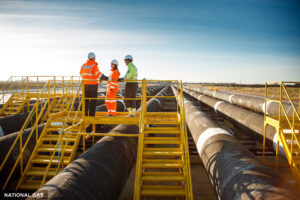
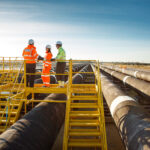
The East-West pipeline, built in the early 1980s, currently transports up to seven million bpd of crude from fields in the eastern province to the Red Sea port of Yanbu. About two million bpd feed domestic refineries while roughly five million bpd are exported, making the pipe a lifeline for Saudi exports since the Iran war forced the closure of the Strait of Hormuz in February.
The proposal is part of a broader regional strategy to bypass the Hormuz chokepoint, through which a fifth of global oil and liquefied natural gas flows. A series of missile and drone attacks on tankers, including a Qatari LNG carrier and a Saudi crude tanker, has underscored the vulnerability of Gulf shipping lanes and spurred efforts to build redundancy.
The United Arab Emirates is already completing a new West-East pipeline that will double its own bypass capacity to Fujairah next year. If the Saudis proceed, engineers would either upgrade existing pumping stations or lay a parallel pipeline; one source said a smaller line for oil products was under consideration.
Any project would require changes to Saudi pricing mechanisms and would take years to complete, given cross‑border negotiations and the need to secure financing.
The East-West corridor’s importance grew exponentially when the Iran war halted shipping through Hormuz. Gulf producers were forced to shut in as much as 12 million bpd at the height of the crisis. Flows have partially recovered since a preliminary US‑Iran deal allowed some tankers to transit, but they remain below pre‑war levels.
Analysts at Hardcastle Advisory told Reuters that the pipeline talks reflect a strategic realisation among Gulf states that they cannot rely solely on Hormuz. For Saudi Arabia and its neighbours, expanding pipeline capacity now could protect exports from future disruptions and allow them to capture market share when sanctions or conflict ease.
For UK observers, the expansion is a double-edged sword. On the one hand, additional pipeline capacity could reduce the risk premium built into crude prices by offering a secure export route. This would benefit refiners and consumers in Europe by keeping seaborne supply steady and potentially capping prices. On the other hand, if Gulf producers embark on a ‘race to the top’ in production capacity once the war ends, the resulting oversupply could depress prices and challenge North Sea producers.
Any expansion is likely years away, but traders should monitor negotiations, as increased pipeline capacity may shift trade flows away from Europe’s residual refining complex toward Asia and Africa. The project also illustrates a broader theme: energy security, rather than climate ambition, is currently driving investment decisions in the Gulf.
For transition‑focused investors, that raises questions about the longevity of oil revenue streams and underscores the need to diversify into low‑carbon assets.