

- The UK’s National Energy System Operator (NESO) reportedly paid about £10 million to secure additional electricity during a heatwave, more than four times its usual daily procurement costs.
- The system operator cancelled a margin notice after agreeing to pay roughly £1,400 per megawatt‑hour for 1.7 GW of imported power, close to twenty times last June’s average wholesale price.
- Demand spiked as households switched on air conditioners and fans while low wind speeds and high river temperatures in France cut renewable and nuclear output, prompting calls for gas plants to run at full tilt.
With Britain baking under a rare June heatwave and wind speeds languishing last week, the UK grid operator found itself scrambling to keep the lights on.
Officials at NESO issued a margin notice on 24 June, signalling that available capacity might fall below the prudent safety margin during the early evening. This is the kind of alert normally seen in winter cold snaps, not in summer. Households turning on fans, air conditioning units and cold drinks sent demand soaring as high temperatures and low wind speeds curtailed renewable output.
According to the Guardian, the operator expected to spend about £10 million – roughly four times its normal daily outlay – to ensure enough generation. A handful of gas‑fired power plants were paid almost £4 million to run for just a few hours as viewers watched England’s World Cup match, and imported electricity fetched eye‑watering sums.
The margin notice was lifted only after NESO agreed to pay about £1,400 per megawatt‑hour for 1.7 gigawatts of imported electricity from continental Europe. That price was nearly twenty times the June 2025 average and underscores how tight the system had become.
Officials emphasised that there was never a risk of a blackout – the warning is designed to pre‑empt shortages by signalling to generators that more capacity is needed. Still, the cost of avoiding a shortfall prompted criticism from some quarters that Britain’s electricity market lacks sufficient flexibility.
The underlying problem was a combination of high demand and reduced supply. Wind speeds were depressed by a persistent high‑pressure system, labelled an ‘Omega block’, while scorching temperatures pushed up river temperatures in France, forcing EDF to cut nuclear output and sending wholesale prices across Europe to multiyear highs.
Britain’s all‑time June temperature record – 35.8 °C in West Sussex – was broken that day, putting additional stress on infrastructure. With domestic generation running flat out and interconnectors strained, NESO resorted to imports at premium prices. The incident illustrates how extreme heat can strain the grid in similar ways to winter cold, challenging the notion that summer is a period of surplus electricity.
Stress tests
Analysts say these stresses will become more frequent as climate change drives more extreme weather. A report by the Climate Change Committee recently warned that Britain’s progress on electrification is too slow, leaving households exposed to fossil‑fuel price spikes and undermining the energy transition.
The committee urged ministers to remove policy costs from electricity bills, expand electric vehicle charging and make heat pumps more affordable.
Boosting demand‑side response programmes could also help; the Guardian noted that NESO’s demand flexibility service managed to secure only 92 MW of demand reduction during the heatwave, compared with the 1.9 GW supply gap NESO sought to fill.
Moreover, the episode exposes a tension at the heart of Britain’s power transition. On one hand, renewable generation is expanding rapidly and is set to dominate future supply; on the other, the system still relies on flexible fossil‑fuelled plant and imports to manage short‑term imbalances.
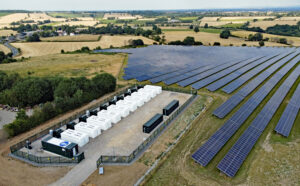
Large‑scale battery and pumped hydro storage projects, such as those shortlisted by Ofgem under its long‑duration storage cap‑and‑floor scheme, are intended to provide multi‑hour backup. But until those assets are built at scale, NESO will continue to rely on high‑cost imports and gas to get through hot, windless evenings.
To avoid future £10 million stress tests, policymakers and industry will need to accelerate investment in storage, demand‑side response, grid reinforcement and climate‑resilient infrastructure.
Moreover, the heatwave underscores the social impacts of extreme weather. Schools were closed, hospitals cancelled appointments and train operators urged passengers to travel only if necessary. Unions even called for workers to take part in a “heat strike” on the hottest day.
Britain’s infrastructure and labour laws are largely designed for cold winters, not blistering summers. The £10 million emergency purchase may have kept the lights on, but it should also serve as a wake‑up call: the energy transition must adapt to a warming world, not just a low-carbon one.