
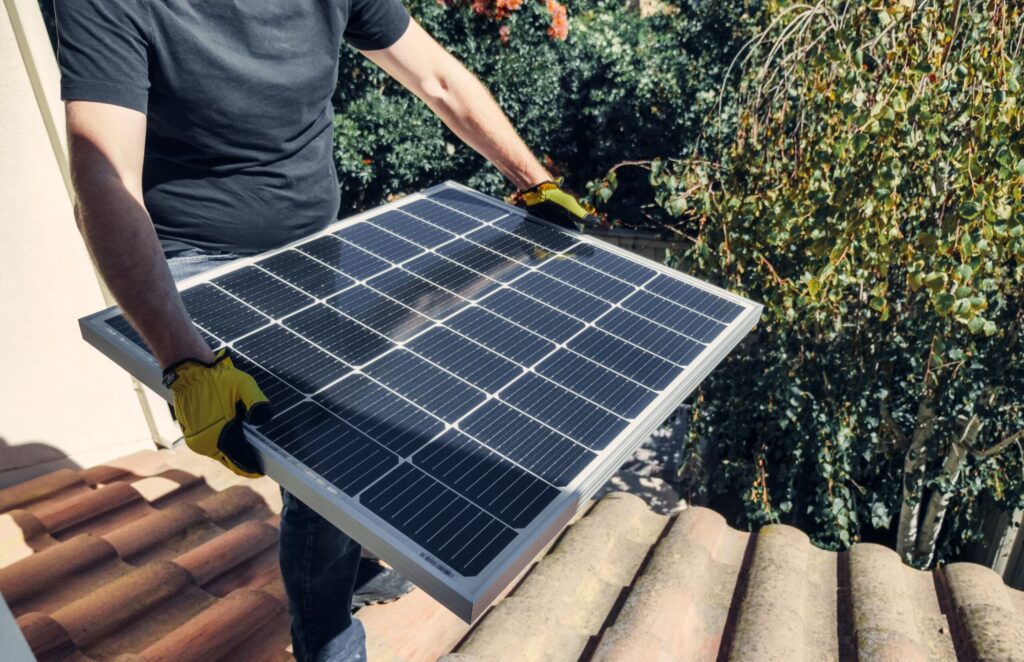
- Egni Co-op, managed by community energy charity Awel Aman Tawe, has secured almost £1.4 million from the Development Bank of Wales’ Local Energy Fund to deploy around 2 MW of community-owned rooftop solar.
- The loan will finance installations on schools and public buildings across Wales, generating about 1.9 GWh of renewable electricity annually, with roughly 65% consumed on-site.
- Egni has already installed over 5 Megawatt peak (MWp) of rooftop solar across 100 sites and claims to have saved host organisations over £1 million in electricity costs.
In a sign of the growing momentum behind community energy, a Welsh solar co-operative has secured fresh capital to expand its portfolio of rooftop installations.
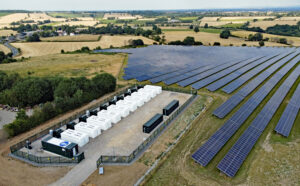
Egni Co-op, a not-for-profit organisation managed by the community energy charity Awel Aman Tawe, has obtained a loan of nearly £1.4 million from the Development Bank of Wales’ Local Energy Fund. The financing will enable Egni to install about 2 MW of new solar arrays on schools and public buildings across Wales, generating an estimated 1.9 GWh of clean electricity per year and helping to cut energy bills for host organisations.
The loan marks one of the largest investments to date from the Local Energy Fund, a £12.5 million pot financed by the Welsh government to support community-led renewable projects.
The fund offers loans of up to £2 million on terms up to 20 years for community groups, social enterprises and local SMEs. Egni’s project will take advantage of these favourable terms, repaying the loan through savings on electricity bills and revenue from selling surplus power.
According to Egni, around 65% of the electricity produced will be used on-site, insulating schools and public buildings from volatile energy prices. The remainder will be exported to the grid, supporting Welsh government targets to generate 100% of electricity from renewables by 2035.
Egni is no stranger to scaling community solar. Since 2019 it has installed more than 5 MWp of rooftop panels across over 100 sites, including leisure centres, arts venues and community halls.
The co-operative raises capital through community share offers (more than £5 million has been invested to date), and reinvests surpluses into educational programmes and climate awareness initiatives. Egni estimates its existing projects have already saved host organisations over £1 million in electricity costs and reduced carbon emissions by around 4,500 tonnes.
The new loan will support local supply chains, with Egni planning to hire Welsh contractors and suppliers for the installations, helping to sustain green jobs and retain economic benefits within the region.
Egni development manager Jenny Carlisle said the investment demonstrated how community organisations can deliver renewable projects at scale, adding: “The installations reduce carbon emissions, lower electricity costs and create long-term community benefit”.
Small-scale blueprint
Across the UK, community energy groups have struggled to access affordable finance since subsidy regimes such as the feed-in tariff ended. The Welsh government responded by creating Ynni Cymru, a state-owned energy company tasked with promoting community ownership, and by funding the Local Energy Fund.
The UK government has launched its own state-backed initiative, Great British Energy, with a similar mandate. Policymakers view these schemes as essential to ensuring the benefits of the energy transition – lower bills, resilient supply and skills development – are shared widely, rather than accruing solely for large utilities.
Egni’s success provides a blueprint: by combining community ownership, finance and educational outreach, the co-operative has built public support for renewables and demonstrated that small-scale projects can deliver meaningful carbon and cost savings.
As the energy system becomes more decentralised, with rooftop solar, batteries and electric vehicles interacting on local grids, models like Egni’s could play a crucial role in balancing supply and demand. They also empower citizens to take part in the transition and keep economic benefits within their communities.
The challenge now is to replicate this model at scale. Community energy advocates want the UK government to provide long-term policy certainty, streamline planning for rooftop projects and offer tax incentives or guarantees to unlock private capital.
With high wholesale electricity prices and growing concern about energy security, there is a window of opportunity for community schemes to flourish. Egni’s latest loan shows what is possible when supportive finance, local leadership and national policy align.