
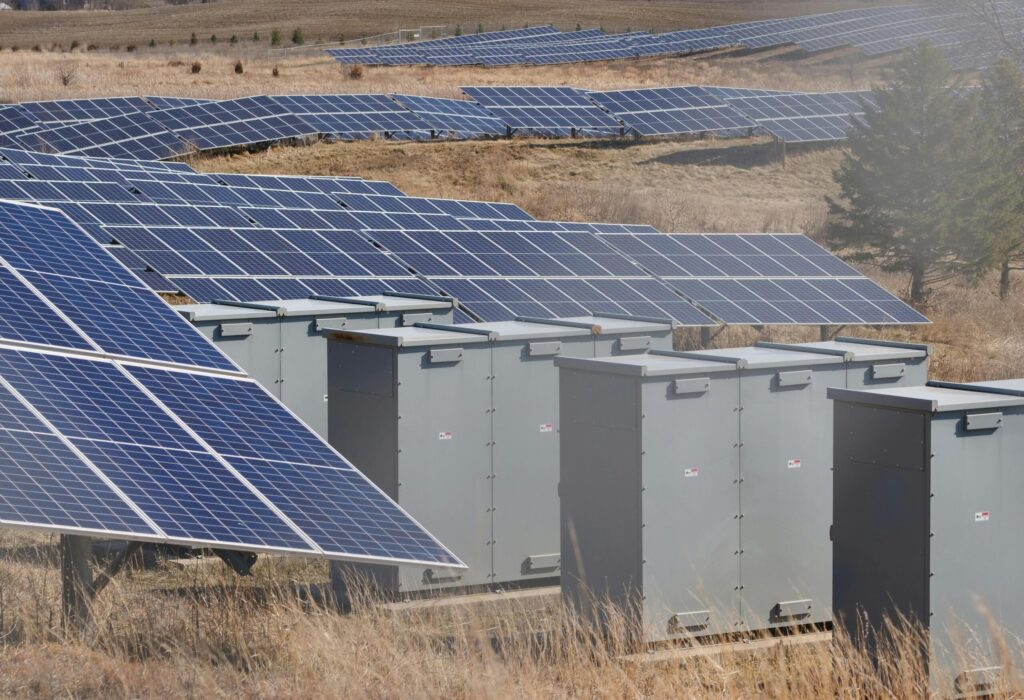
- Chinese technology company Envision Energy and UK operator Pulse Clean Energy will jointly deliver a 129 MW / 310 MWh battery energy storage system in Wolverhampton. The system is optimised for a 2.4‑hour discharge and will use Envision’s Gen 7 platform with grid‑forming capability and AI‑powered control.
- The project is part of Envision’s Future Energy Systems strategy and aims to support renewable integration, improve grid flexibility and decarbonise local industry.
- The partnership is intended to strengthen regional energy resilience and create a blueprint for scaling advanced storage technologies across the UK.
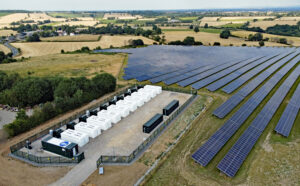
Envision Energy and Pulse Clean Energy have announced a partnership to build a large-scale battery energy storage system (BESS) in Wolverhampton, marking one of the UK’s most technically advanced storage projects to date.
The 129 MW / 310 MWh installation will use Envision’s seventh‑generation battery platform, which pairs high‑performance lithium‑ion cells with grid‑forming inverter technology and artificial intelligence to deliver a 2.4‑hour discharge.
The system is designed to provide both energy and ancillary services, allowing it to store excess renewable electricity and then dispatch power rapidly to balance supply and demand.
The project is part of Envision’s “Future Energy Systems” strategy, which aims to deploy digital solutions that support the decarbonisation of power grids worldwide. Pulse Clean Energy, backed by investment from DIF Capital Partners, has been developing a portfolio of battery projects across the UK and sees Wolverhampton as a flagship site.
Company executives said the partnership brings together Envision’s manufacturing and software expertise with Pulse’s local project development and market knowledge. Envision global head of storage Henry Peng said the system “demonstrates our commitment to supporting the UK’s energy transition through advanced technology,” while Pulse chief executive Aazzum Yassir said the collaboration “will strengthen regional energy resilience and accelerate decarbonisation”.
At the heart of the project is grid‑forming capability, a feature that allows the battery to operate like a virtual synchronous generator. Unlike traditional grid‑following inverters that simply inject power based on grid voltage, grid‑forming converters can set their own voltage reference, providing inertia, frequency and voltage support.
This is critical as coal and gas plants retire and grid stability increasingly depends on inverter‑based resources. The Wolverhampton system will also incorporate AI‑driven controls that use predictive algorithms and digital twins to optimise dispatch and maintenance.
The battery’s 2.4‑hour duration was chosen to maximise revenues from both energy arbitrage and balancing services; it can deliver 310 MWh of energy, enough to power around 20,000 homes for two and a half hours.
The project signals a maturing storage market in which advanced technologies are moving from pilot to commercial scale. Grid‑forming batteries are particularly relevant to the National Energy System Operator’s ambitions to procure system‑stability services from non‑synchronous sources.
As more renewables connect to the grid, the ability of batteries to provide synthetic inertia and maintain voltage becomes a valuable service that can attract premium revenues. The partnership also underscores the importance of digitalisation: AI‑enabled forecasting and dispatch can squeeze more value from storage assets and improve system reliability.
If the Wolverhampton project succeeds, it could influence future rounds of the Contracts for Difference scheme and set a benchmark for other developers. It may also stimulate investment in domestic battery manufacturing and training, given the UK’s push to build a local supply chain.
Ultimately, the project exemplifies how storage is evolving from a “nice to have” into a cornerstone of a flexible, resilient power system.