

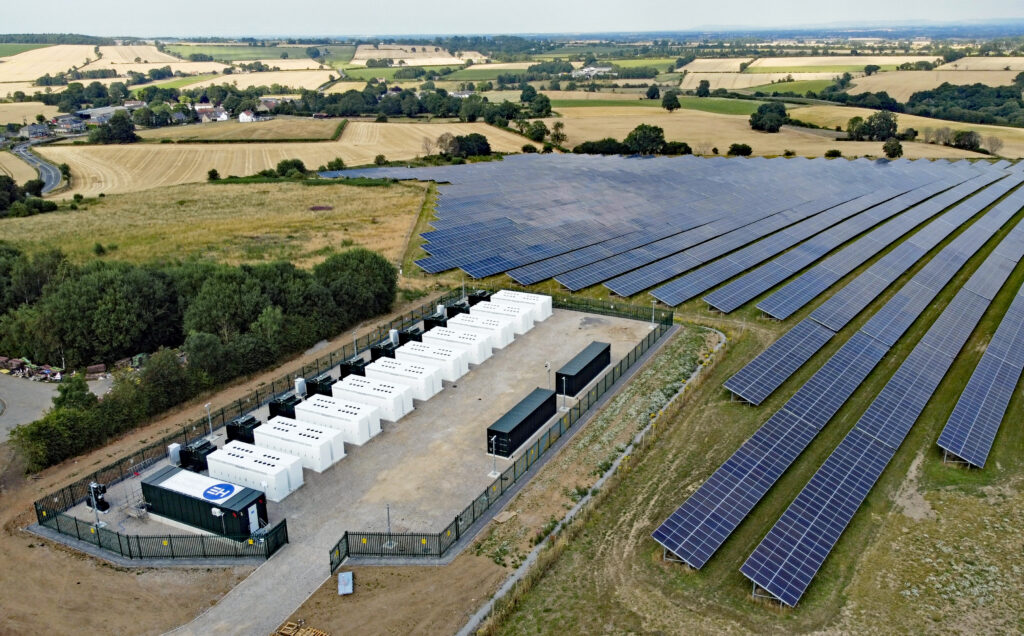
- Wood Mackenzie has found four-hour storage cheaper than open-cycle gas turbines in every market where it compared both technologies.
- The finding concerns modelled lifetime electricity costs – not simply equipment prices or the ability to replace every gas plant function.
- For UK developers the opportunity is stronger, but connection access, dispatch and dependable revenues remain decisive.
Four-hour battery storage now has a lower modelled lifetime cost than new open-cycle gas turbines in all 43 markets where Wood Mackenzie compared the technologies, strengthening the economic case for using batteries to meet short-duration electricity peaks.
The consultancy’s analysis attributes the shift to expanding battery manufacturing alongside gas turbine shortages and fuel price volatility. Its regional studies cover Europe, North America, Latin America, Asia Pacific, and the Middle East and Africa.
“This economic shift is decisive and widening,” said Ahmed Jameel Abdullah, principal analyst at Wood Mackenzie.
The finding adds to the pressure on developers considering new gas-fired peaking capacity. However, it does not establish that batteries can replace gas generation in every operating condition, or that every storage project will earn an attractive return.
Utility Dive reported that Wood Mackenzie puts the US cost advantage for four-hour batteries entering operation in 2026 at 65-75% against new open-cycle gas peakers, depending on state-level carbon pricing. That is a US-specific comparison, not a saving that should be applied directly to British projects.
Short-duration flexibility
The distinction between power generation and storage remains fundamental. A gas turbine produces electricity using fuel; a battery shifts electricity generated elsewhere and must have sufficient charge when it is needed.
Four-hour storage can serve an evening peak or another relatively short period of tight supply. It cannot, without recharging, sustain output through an extended shortage lasting many hours or days. Comparing the technologies therefore requires a clear definition of the service being purchased.
For the UK, that distinction is already reflected in system planning. NESO’s original Clean Power 2030 pathways envisaged approximately 23-27 GW of batteries alongside around 35 GW of unabated gas capacity. The scenarios retain gas as a security resource while substantially expanding storage and reducing reliance on fossil generation.
The new cost findings strengthen the argument that routine short-duration balancing should increasingly be tested against a battery alternative. They do not settle the separate question of how to maintain security during prolonged periods of low renewable output.
Nor is the storage cost trajectory uniformly downward. Wood Mackenzie reports that European turnkey battery capital costs rose around 2%, following a rebound in cell prices. It nevertheless forecasts a 12% capital cost reduction by 2031.
Lower costs do not guarantee bankable revenues
The key dynamic is between a technology becoming cheaper and a project becoming financeable. A battery may be competitive on lifetime costs but still struggle if its connection is delayed, its operating restrictions limit useful dispatch, or its revenue assumptions depend on price spreads that narrow as competing capacity arrives.
More storage can reduce the peaks and troughs from which storage earns income. Developers consequently need to assess contracted revenues, optimisation arrangements and operating flexibility alongside falling equipment costs.
NESO’s Future Energy Scenarios identifies batteries principally as a source of within-day flexibility and system services. It also links further deployment to connection reforms, planning progress and market structures that provide appropriate revenue opportunities.
For UK professionals, the conclusion is not that gas has become redundant. It is that new gas peakers face a tougher commercial comparison for the tasks batteries can perform.
The next investment decisions should turn on duration, location, charging availability and deliverable revenues – not a headline cost ranking alone.