
- New measures target two oil companies and 12 additional shadow fleet tankers within a package of 38 designations.
- The government says sanctioned producers now account for more than 90% of Russian oil production capacity, not that this output has been removed from the market.
- Parallel support for Ukraine’s grid repairs, generators and solar underlines the link between energy security and distributed resilience.
The UK has widened sanctions against Russia’s oil industry and the networks supporting its exports, while announcing £20 million for Ukraine’s energy security ahead of winter.
The sanctions package, published on 8 October, adds Russian oil companies Zarubezhneft and INK Capital alongside 12 tankers identified as part of the shadow fleet. It comprises 38 new designations covering oil, financial services and military supply chains.
The Foreign, Commonwealth and Development Office said UK sanctions now cover companies representing more than 90% of Russia’s oil production capacity, with the latest vessel additions bring the number of sanctioned shadow fleet oil tankers to more than 600.
The measures were announced during Foreign Secretary Ed Miliband’s visit to Ukraine, where he met President Volodymyr Zelenskyy and visited the site of a deadly Russian strike in Pryluky.
The accompanying energy funding forms part of a £54 million winter support package. It will help finance emergency grid repairs, backup generators, solar supplies and technologies intended to diversify Ukraine’s power sources. A further £34 million supports heating, water and humanitarian assistance.
Counterparty complexity
The oil measures are designed partly to make circumvention harder. The government says targeting additional producers reduces the scope for rebadging oil under the name of an unsanctioned company.
The package also targets three cryptocurrency exchanges and two payment platforms suspected of facilitating sanctions evasion, alongside suppliers of goods used by Russia’s military.
“If you help Russia fund or equip this war, you will face the consequences,” the FCDO said in its announcement.
For UK-linked energy businesses, the immediate significance is increased counterparty and supply chain complexity. A transaction’s exposure can extend beyond the named seller to ownership, control, payment arrangements and transport.
Government guidance explains that asset freeze restrictions can also apply to entities owned or controlled by designated persons. Businesses must therefore distinguish between checking a name against a list and understanding who ultimately controls the relevant entity.
The precise restrictions and any applicable permissions depend on the designation and transaction involved.
Sanctioned capacity remains
The government’s 90% figure measures the reach of its sanctions across producers. It is not evidence that 90% of Russian production has stopped or that an equivalent volume has disappeared from global oil markets.
The market effect will depend on whether restrictions disrupt payments, shipping and access to services, or whether exports are redirected through alternative arrangements. The announcement itself does not quantify barrels removed, additional discounts or a resulting change in benchmark prices.
For energy buyers, sanctions can increase uncertainty without producing an immediate physical shortage. Assessing the commercial effect requires evidence of actual changes in export flows and transaction costs.
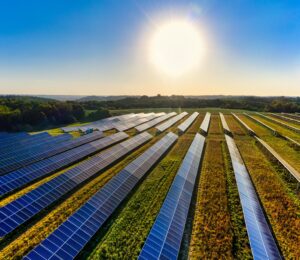
The Ukraine funding provides an additional energy transition angle. Repairing the central grid remains essential, while generators and solar can provide additional options when infrastructure is damaged.
For suppliers of distributed energy equipment, the package signals the importance of resilience as well as decarbonisation. It should not, however, be treated as an announced procurement opportunity: the release does not set out contracts or supplier-selection arrangements.