
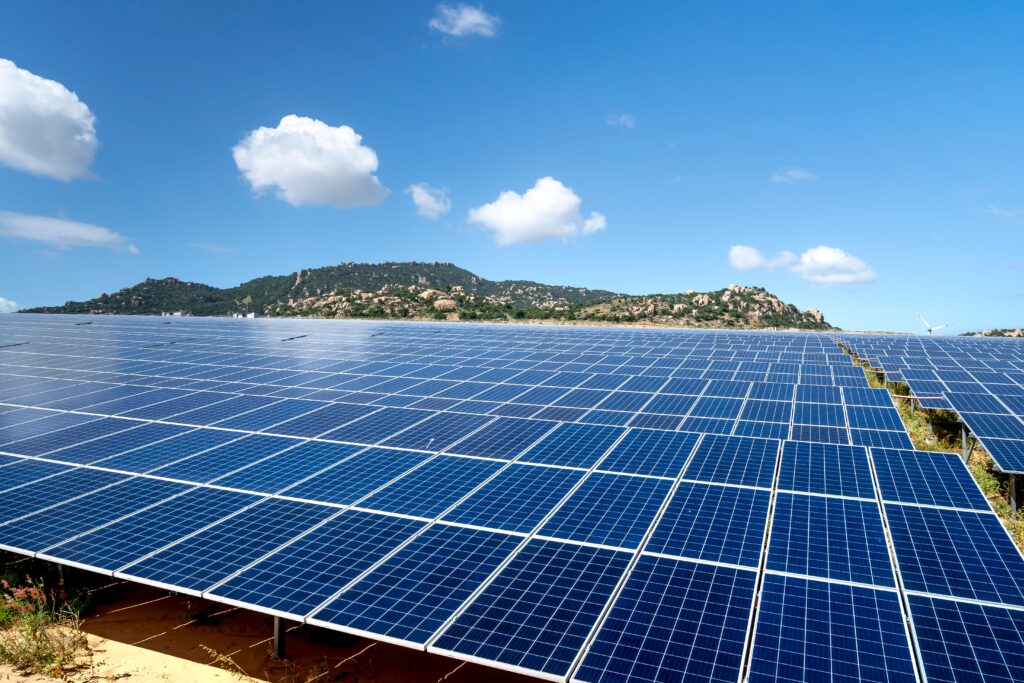
- Nala has signed agreements to acquire four solar farms in Norfolk, Somerset and East Sussex, with handovers planned across 2027 and 2028.
- The projects are at the ready-to-build or construction stage, with expected revenues supported by a corporate power purchase agreement and Contracts for Difference.
- The staged handovers let Metlen recycle development capital while giving Nala an operating portfolio to build around as the projects are delivered.
Nala Renewables has agreed to buy four UK solar projects with a combined capacity of about 119 MW from Metlen Energy & Metals, giving the London-headquartered investor a portfolio that is expected to come on stream in phases in 2027 and 2028.
The projects, in Norfolk, Somerset and East Sussex, are either ready to build or already under construction.
Metlen said each project would be delivered on issuance of its provisional acceptance certificate, the contractual milestone for handover. The companies did not disclose the price or identify the individual sites.
Nala expects them to generate nearly 131 GWh a year once operational, with revenue supported by a combination of a corporate power purchase agreement and Contracts for Difference.
Nala interim chief executive Remy Verot described the agreements as “a cornerstone investment for Nala as we expand our operational footprint in the UK”. The buyer develops and operates wind, solar and storage assets, with a primary focus on Europe and Chile.
Metlen said the sale forms part of its strategy of developing and building renewable projects, then selling them to free up capital for its international pipeline.
All in the timing
A project’s route to market shapes how an investor values it. A Contract for Difference typically stabilises the price a qualifying generator receives against a market reference price, while a corporate power purchase agreement sets commercial terms with a buyer.
The announcements describe the revenue arrangements across the portfolio. Without a site-by-site breakdown or disclosed terms, buyers looking at the deal as a market benchmark have limited visibility into how much risk each contract removes.
The timing of delivery matters almost as much as the revenue contract: a solar farm with an agreed price still needs its grid connection and equipment ready in time to generate. Metlen’s staged handovers provide a clear delivery milestone for each asset, and they allow the two companies to transact across several projects without relying on a single commissioning date.
Britain’s Solar Roadmap puts the 2030 capacity range at 45-47 GW, but getting there will require developers to finance several waves of construction at once. A transaction signed before handover gives a developer a buyer for a project that is still tying up capital, while the investor can start assembling an operating portfolio around identifiable assets and delivery dates.
The model is particularly relevant where a developer has more projects ready to progress than it wants to hold on its own balance sheet.
Metlen said the agreements could form the basis for further renewable and storage deals with Nala in Europe. The first measure of that relationship will be whether the British projects reach handover on schedule, at which point each site moves from an agreed acquisition to an asset that can start earning the revenues on which the deal was based.