
- Low Carbon Hub has opened a share offer to help finance a 7.4 MW solar park with 10 MWh of battery storage.
- The live offer lists a £500,000 target, a £100 minimum investment and a forecast 5% return.
- The project combines community ownership with exposure to electricity and flexibility markets, making financing and operating assumptions central to delivery.
Low Carbon Hub has launched a community share offer to help fund Common Lot, a combined solar and battery development near Yarnton in Oxfordshire, with construction planned to begin in May 2027.
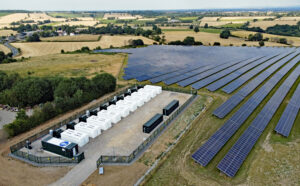
The project pairs 7.4 MW of solar capacity with a 10 MWh battery. Low Carbon Hub expects commissioning in February 2028 and forecasts annual solar generation of 7.9 GWh. These are development targets and estimates.
The offer opened on 5 November and seeks £500,000 through the organisation’s Community Energy Fund. Its live Ethex listing gives a closing date of 5 February 2027, a minimum investment of £100 and a forecast annual return of 5%.
Investment returns depend on the performance of Low Carbon Hub’s wider energy portfolio, with the shares providing exposure to the society’s activities rather than a guaranteed return from Common Lot alone.
Ethex states that returns are not guaranteed and investments are outside Financial Services Compensation Scheme protection.
Portfolio funding
The battery is designed to charge or discharge at up to 4.9 MW and can import up to 2 MW from the grid. That gives it a potential role beyond storing the solar park’s own production, allowing it to respond to wider electricity market conditions.
Trade publication Solar Power Portal reported that integrating the battery from the outset distinguishes Common Lot from Low Carbon Hub’s earlier Ray Valley development, where storage was added subsequently. The organisation’s claim to a community solar-plus-storage first should be understood in that specific context.
For project economics, the battery creates choices about when electricity is sold. It can potentially move solar output away from periods of weak prices and use grid imports when charging is attractive. The value depends on the price difference remaining after losses, degradation and operating costs.
Those decisions also introduce forecasting risk. Solar generation offers a relatively familiar production profile, while storage revenues depend more heavily on dispatch strategy and changing market conditions. Adding a battery can diversify income, but the combined business case needs to justify the additional capital and operating expenditure.
Low Carbon Hub plans to combine community shares with bank debt and potentially a community bond. Triodos Bank has made an indicative loan offer, subject to approval and final terms.
The share target represents one element of the proposed financing structure; raising local equity can demonstrate support and provide patient capital, but it does not remove the need to secure debt, manage construction exposure and meet a lender’s requirements.
The offer also illustrates how portfolio funding can support community ownership. Ethex says investors can apply to withdraw shares after they have been held for at least four years, subject to the withdrawal arrangements. That gives the society longer-term capital while limiting investors’ immediate access to their money.
Low Carbon Hub forecasts £6.3 million in community benefit over the project’s 42-year lifetime, although that outcome will depend on the surplus available after project costs and financing obligations.