
- Ørsted’s nine-month operating earnings rose by 19%, excluding partnerships and cancellation fees.
- Interest rate related impairments on US projects reduced reported profit.
- Lower 2026 investment guidance reflects payment timing, while UK construction milestones advance into testing and commissioning.
Ørsted has reported stronger operating earnings while recording a substantial fall in profit, as higher interest rates reduced the assessed value of its US projects.
EBITDA excluding new partnerships and cancellation fees increased by 19% to DKK20.2 billion during the first nine months of 2026. Profit fell to DKK2.6 billion, down DKK3.9 billion, mainly because of non-cash impairments linked to US interest rate increases.
The company maintained full-year guidance for adjusted EBITDA above DKK28 billion. Expected gross investment fell to DKK45–50 billion from DKK50–55 billion, reflecting changes in payment timing rather than a reduction in total project investment.
Q3 adjusted EBITDA of DKK5.26 billion exceeded the DKK4.42 billion average forecast in a company-provided analyst poll, Reuters reported.
Chief executive Rasmus Errboe said Europe’s energy security agenda was helping drive offshore wind development, providing a more favourable demand backdrop – although that does not remove the financing pressures reflected in the results.
“We’ve maintained industry-leading execution across our construction pipeline, adding 1.8 GW of renewable energy capacity in Europe and the US over the past few months, supporting energy security, competitiveness, and decarbonisation,” Errboe said.
Payment schedules
The investment revision is important for contractors and suppliers interpreting Ørsted’s spending plans. A payment moving between financial years can change a supplier’s cash receipts without changing the lifetime value of the underlying project.
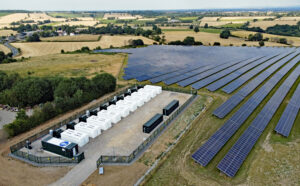
Operationally, higher wind speeds, electricity prices and generation from new projects supported earnings. The update also confirmed completion of Hornsea 3’s second offshore converter installation and construction of the 300 MW battery beside its onshore converter station, which will now enter testing.
The Norfolk storage project was originally approved in 2024 with an energy capacity of 600 MWh. That implies approximately two hours of discharge at its full 300 MW rating, before accounting for operational limits and losses. Ørsted’s original announcement described its role in shifting surplus electricity into periods of greater demand.
For the UK electricity system, testing is a key stage. Physical construction must be followed by demonstrations that the asset can operate safely, respond to instructions and meet the requirements of the services it intends to sell.
The financial results, meanwhile, show two distinct consequences of expensive gas and higher interest rates. Elevated electricity prices can support generation earnings where contracts permit exposure, while higher discount rates reduce the present value of cash expected many years into the future.
A non-cash impairment does not require an equivalent immediate payment. It does indicate that assumptions supporting an asset’s carrying value have deteriorated, which can affect investors’ assessment of the capital committed to the portfolio.
This makes cash generation, project completion and valuation movements worth examining separately. Construction is progressing, the near-term payment profile has changed and financing conditions continue to affect the group. Each has a different implication for contract risk, procurement and the timetable for new electricity entering service.