
- SSEN Transmission says its planned £29bn programme of grid upgrades across the north of Scotland could support up to 24,000 jobs in Scotland, including 10,000 in the north, with wider UK employment support estimated at up to 50,000 roles.
- The company’s modelling suggests that, when combined with investment by other transmission operators and renewable generators, the programme could add around £60bn to UK economic output and leave Scotland’s economy up to 3% larger over the long term.
- The investment is central to SSEN’s Pathway to 2030, covering 11 major onshore and offshore reinforcement schemes intended to move more Scottish renewable power to demand centres.
SSEN Transmission has set out a more expansive economic case for its £29bn programme of electricity-grid investment in northern Scotland, arguing that the infrastructure build-out could permanently reshape the region’s economy as well as unlock renewable generation for the rest of Great Britain.
The company’s new report, Re-energising the North: Transforming Scotland, argues that investment in transmission infrastructure should be viewed not simply as a cost of decarbonisation, but as an industrial strategy in its own right.
SSEN says its programme could support up to 10,000 jobs in the north of Scotland and 24,000 across Scotland, while creating opportunities in sectors ranging from construction and engineering to forestry, aggregates, concrete and peatland restoration.
The headline economic figure requires some care. SSEN’s analysis says its £29bn programme, when combined with spending by other transmission owners and investment in renewable generation, could add around £60bn to UK economic output over the long term.
It estimates that Scotland’s economy could become up to 3% larger than it would otherwise have been. Those are modelled, economy-wide outcomes rather than revenue forecasts or direct benefits attributable solely to SSEN’s projects.
The report was developed using macroeconomic modelling which SSEN says was validated by the Fraser of Allander Institute. Its core argument is that grid investment can produce a longer-lasting effect than the temporary demand created by construction: higher wages, greater supply-chain activity and new productive capacity could persist if businesses and workers are able to capture a meaningful share of the opportunities created.
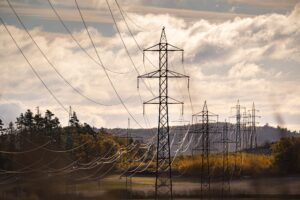
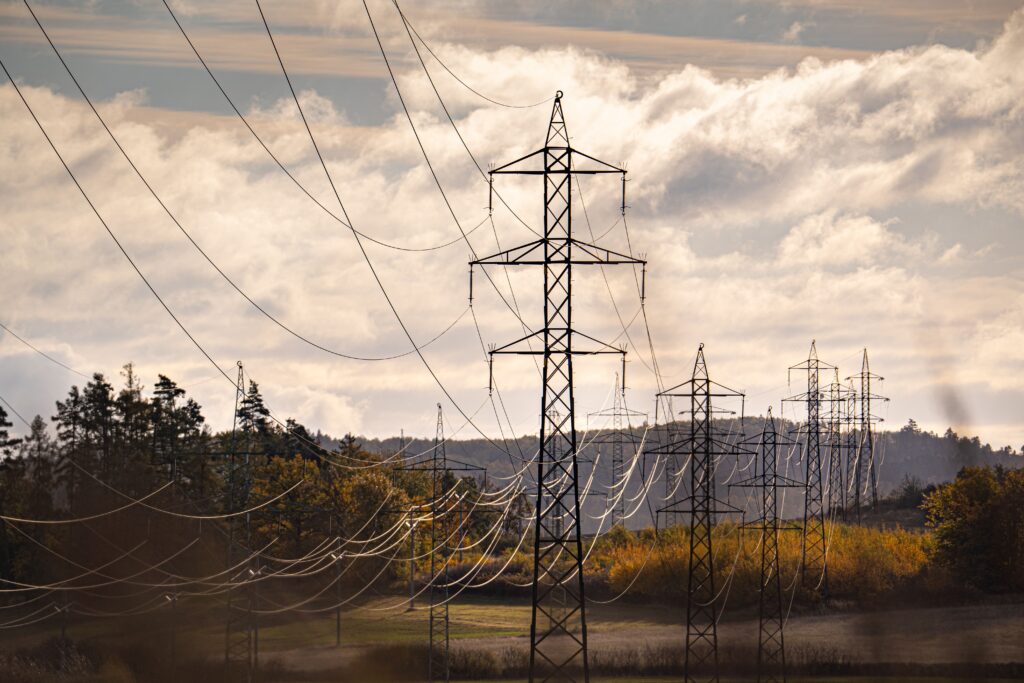
At the centre of the proposition is SSEN’s “Pathway to 2030” programme, which includes new overhead lines, substations and subsea links. The business says it is investing £29bn in the north of Scotland’s transmission system by 2030, where it expects renewable generation to more than double from today’s level of just over 10GW. The region is forecast to account for around one-fifth of Great Britain’s clean-power generation by the end of the decade.
Economic prize
That makes the transmission system a strategic constraint on the UK’s wider clean-power ambitions. Much of Scotland’s wind resource is remote from major demand centres, and new generation cannot deliver its full value if network capacity is inadequate.
SSEN’s argument is that expanding the grid should reduce bottlenecks, enable more domestic low-carbon power to reach consumers and cut the wasteful curtailment of renewable generation. Ofgem’s RIIO-ET3 framework, which covers April 2026 to March 2031, is intended to ensure network companies can fund justified upgrades while protecting consumers from inefficient expenditure.
The programme is no longer merely a long-term aspiration. SSEN says five of its 11 major projects are already in construction, six have secured full consent and more than three-quarters of the required planning consents have been obtained. The company accepted Ofgem’s final RIIO-T3 settlement in March, describing it as investable and deliverable overall.
However, the economic prize remains conditional. Large transmission schemes face mounting competition for transformers, cables, specialist labour and construction capacity across Europe and beyond.
Ofgem has warned that global demand for network equipment is rising sharply because of grid expansion, electrification and data-centre growth, increasing lead times for critical components.
There is also the political challenge of delivering nationally significant infrastructure through rural communities. SSEN has proposed more than £100mn in community benefit funding and a housing strategy intended to support or refurbish around 1,000 homes for construction workers, before transferring them into longer-term local use.
Scotland’s grid build-out is becoming a test case for whether the UK can turn clean-power investment into locally visible economic development. The transmission network may be essential to meeting national energy targets, but SSEN’s report recognises that its political durability will depend on whether communities hosting pylons, substations and cable landfalls see lasting gains in jobs, skills, housing and local supply chains.